





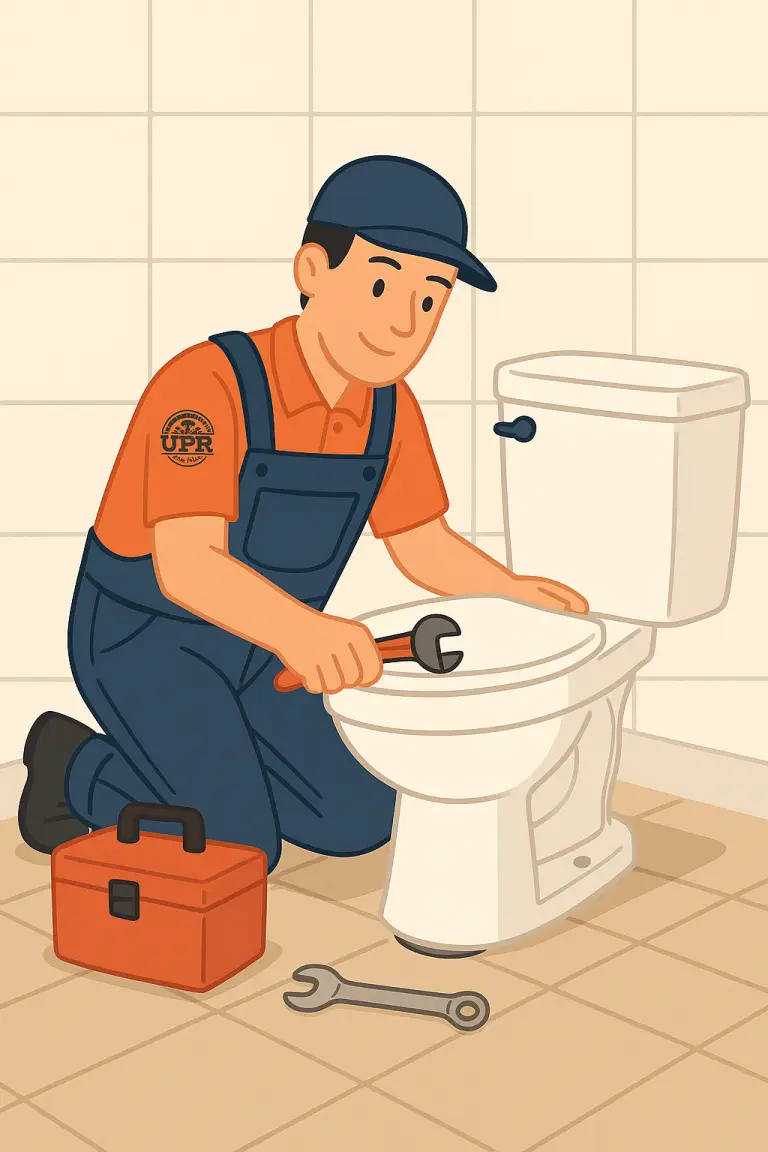
A Toilet Depends on More Than the Fixture You Can See
A toilet may look like one simple plumbing fixture, but several different systems have to work together every time it is used. The tank needs to refill properly, the flush mechanism has to release enough water through the bowl, the toilet must remain securely mounted to the floor, and the sealed connection underneath has to carry wastewater into the drainage system without leaking into the bathroom.
When something goes wrong, the visible symptom does not always identify which part has failed. A toilet that keeps running usually points toward a problem inside the tank, while water around the base may come from the drainage seal, tank hardware, supply connection or shut-off valve. Weak flushing can originate inside the toilet itself, but recurring clogging may indicate that the restriction is farther downstream rather than inside the fixture.
At UPR (Underground Plumbing Repair), we repair and replace toilets throughout Toronto and the GTA. With more than 20 years of hands-on plumbing and underground experience, we begin by separating the fixture from the plumbing connected to it so the repair stays focused on what has actually failed. If the problem belongs inside the toilet, there is no reason to turn it into a drain-repair project, while symptoms involving several fixtures may require us to look farther into the drainage system.
Running Toilets and Problems Inside the Tank
When a toilet continues running after the flush is complete, water is usually escaping somewhere inside the flushing system or the tank is not shutting off at the proper level. Depending on the fixture, the cause may be a worn flapper, fill valve, flush valve, float, chain or another internal component responsible for controlling the refill and flush cycle.
A running toilet can waste a significant amount of water without creating the kind of visible leak that immediately gets attention. Water may continue moving from the supply into the tank and down through the bowl for days or weeks while the bathroom floor remains completely dry, which is why these problems are easy to ignore until the sound becomes noticeable or water use increases.
Many internal problems can be repaired without replacing the toilet. If the porcelain remains sound and the fixture has otherwise been dependable, replacing one worn component can restore normal operation without changing the entire fixture. Replacement becomes more reasonable when several components have deteriorated, compatible parts are difficult to obtain or the toilet has developed repeated problems that no longer justify continued repair.
The age of the fixture can provide useful context, but it should not decide the repair by itself. A well-built older toilet with one failed component may still be a better repair candidate than a newer fixture that has already developed several recurring problems.
Water Around the Base Needs a Proper Diagnosis
Water appearing around the bottom of a toilet often makes the seal underneath the fixture the first suspect. That seal is one possible source because the connection between the toilet outlet and the drainage flange has to remain watertight whenever the fixture is flushed.
The same wet area can be created by several other components. A supply connector can leak, a shut-off valve can seep around its stem or connection, and tank-to-bowl hardware on a two-piece toilet can release water that travels down the outside of the fixture before collecting on the floor.
The timing of the leak provides useful information because water appearing only while the toilet is flushing points toward a different group of components than moisture that develops while the fixture sits unused. Testing the toilet under those different conditions can help identify the source before the fixture is unnecessarily removed.
When the toilet does need to be pulled, the hidden connection underneath becomes visible and the flange, seal and surrounding floor can be inspected directly. If the flange remains secure and properly positioned, a new appropriate seal and correct reset may be all that is required. If the flange is damaged, loose or improperly installed, that condition needs to be corrected before the toilet goes back into place.
A Loose or Rocking Toilet Needs More Than Tighter Bolts
A properly installed toilet should remain stable during normal use. If the fixture rocks or shifts, that movement can disturb the seal underneath, place stress on the flange and mounting hardware, and eventually create leakage even when the toilet was not originally leaking.
Movement can be caused by an uneven finished floor, damaged flange, poor previous installation or a toilet that is not sitting correctly on its base. Simply tightening the mounting bolts harder does not correct those underlying conditions and can create another problem because porcelain can crack when excessive force is applied around the mounting points.
The proper repair is to determine why the fixture is moving, correct the support or mounting condition and reinstall the toilet so it sits securely without relying on excessive bolt pressure. Once the toilet is stable, the drainage seal beneath it has a much better chance of remaining undisturbed over time.
Recurring Toilet Clogs May Be Coming From Farther Downstream
A toilet can clog because too much material entered the fixture at once, an object became trapped inside the internal passage or an ordinary blockage developed close to the bowl. Those situations can usually be treated as fixture-level problems when the rest of the plumbing continues working normally.
Recurring clogging deserves a wider look because the history changes what the symptoms mean. If the same toilet repeatedly blocks while every other fixture in the house drains properly, the restriction may still be inside the toilet or close to its branch connection. A foreign object inside the trapway, poor internal passage design or another fixture-specific condition can cause repeated trouble even after individual clogs have been temporarily cleared.
When other fixtures begin reacting at the same time, the diagnosis changes significantly. A toilet that gurgles when another drain is used, several fixtures becoming slow together or wastewater appearing at a lower basement drain can indicate that the restriction sits farther downstream in shared drainage rather than inside the toilet itself.
That is where Clogged Pipe or broader Drain Repair work may become relevant. Replacing the toilet will not correct a restriction in the building drain, just as repeatedly clearing the bowl will not solve a damaged sewer farther below the floor. The behaviour of the rest of the plumbing tells us whether the investigation should stay at the fixture or continue farther through the drainage system.
Weak Flushing Can Be a Fixture Problem or a Drainage Problem
A toilet that no longer flushes effectively may have an internal problem that prevents enough water from entering the bowl at the right speed. The tank may not be filling to the correct level, the flapper may close too quickly, internal components may be misadjusted or mineral accumulation may be restricting the passages that move water from the tank into the bowl.
A partially restricted drain can create similar symptoms because wastewater is not leaving the fixture as freely as it should. In that situation, replacing tank components may not improve the flush because the limitation sits below the toilet rather than inside it.
We look at how the tank fills, how the flush begins, how water moves through the bowl and what happens immediately afterward. That sequence helps distinguish a fixture problem from a drainage problem and prevents a serviceable toilet from being replaced simply because the bowl is not clearing normally.
The Shut-Off Valve and Supply Connection Are Part of the Installation
Every toilet depends on a pressurized water connection that refills the tank after each flush. That supply normally includes a local shut-off valve and a connector running from the valve to the toilet, and both components need to remain dependable if the fixture is going to operate properly.
These parts may remain untouched for many years until the toilet finally needs service. Once the valve is operated, an older installation can reveal that it no longer closes completely, has become difficult to turn or begins leaking around the stem or connection.
A toilet repair does not automatically require replacing the shut-off valve. If the existing valve operates properly and remains dry, it can continue doing its job. If it cannot reliably isolate the fixture, correcting it while the toilet is already being serviced can prevent a much more inconvenient situation during the next repair.
The supply connector deserves the same attention because it remains under pressure whenever the water is on. Once the fixture has been disturbed or replaced, the connector and fittings should be checked carefully after the supply is restored so the finished installation remains dry and reliable.
When Repair Makes More Sense Than Replacement
Many toilet problems remain perfectly reasonable to repair. A worn fill valve, leaking flapper, damaged handle or another serviceable internal component can often be corrected without removing the entire fixture, especially when the porcelain remains sound and the toilet has otherwise performed reliably.
The availability of parts, flushing performance, water use and repair history all help determine whether continued service makes sense. If one straightforward repair restores dependable operation, there is little reason to replace the entire fixture simply because a newer model exists.
Replacement becomes more sensible when the porcelain is cracked, important parts are no longer reasonably available, repeated repairs have failed to produce dependable performance or the homeowner is already changing the bathroom and wants a different fixture. These are practical reasons to replace a toilet because they relate to its actual condition or future use rather than an arbitrary age.
The decision should therefore come from what the toilet is doing today and what it is likely to require going forward. Some older fixtures remain excellent repair candidates, while others have reached the point where another repair no longer represents the better long-term choice.
Choosing a Replacement Toilet That Fits the Existing Plumbing
A replacement toilet needs to fit the bathroom and the plumbing below it, not just the homeowner’s preferred design. The rough-in dimension between the finished wall and the centre of the flange influences which fixtures will sit correctly in the available space, and older homes or previous renovations can occasionally contain dimensions that differ from what is normally expected.
The overall size of the toilet matters as well. Bowl shape, height and tank profile can affect clearance around vanities, radiators, doors and other bathroom fixtures, while the existing shut-off valve needs enough room to remain accessible once the new toilet is installed.
The flange and finished floor elevation also influence the installation because the toilet needs to sit properly over the drainage connection without rocking or relying on an unsuitable seal arrangement. New tile or underlayment can change that relationship during a renovation, so the flange condition should be considered together with the final finished floor.
Checking these details before the replacement is purchased avoids forcing a good fixture into a bathroom or rough-in that does not suit it.
A New Toilet Cannot Correct a Bad Drain
Replacing a toilet can improve fixture performance, appearance and water efficiency, but it does not change the condition of the drainage beneath the floor. This becomes particularly important when recurring clogging is one of the reasons replacement is being considered.
If the existing toilet itself is causing the trouble, a new fixture may solve the problem. If the restriction sits inside the branch drain or farther downstream, the replacement toilet can begin experiencing the same symptoms almost immediately because the condition below it has never changed.
The same principle applies to odour and leakage. Sewer smell around the fixture can be related to the seal or mounting condition, but odour elsewhere in the bathroom may have another drainage or venting source. Water around the base can originate beneath the toilet, while moisture in nearly the same area can also come from the supply side.
Diagnosing those possibilities before replacement keeps the work connected to the actual failure. A new fixture should be installed because the toilet needs replacement, not because it happens to be the most visible plumbing component in the room.
Toilet Work During Bathroom Renovations
Bathroom renovations create an opportunity to coordinate the toilet with the final layout before finishes are installed. If the fixture remains in the same position, the existing drainage may continue serving it once the flange, rough-in and surrounding conditions are confirmed.
When the toilet moves, the project becomes more involved because the drainage and venting need to move with it. Relocating a toilet several feet is not simply a matter of choosing another position on the finished floor; the branch connection below needs to reach the new location while maintaining proper drainage and fitting into the rest of the bathroom plumbing.
That is where Washroom Rough-In becomes relevant. The underground or concealed piping should be positioned according to the finished bathroom plan before tile, cabinetry and fixtures make those connections difficult to change.
The finished floor elevation also needs to be considered during the rough-in because new tile, underlayment or other finishes can change the relationship between the toilet and flange. Planning those details together gives the final fixture a much better foundation than trying to compensate at the end of the renovation.
Basement Toilets Depend Heavily on the Underground Rough-In
A toilet installed in a basement relies on drainage beneath the concrete floor, which makes proper rough-in especially important. Once the slab, flooring and finished bathroom are complete, changing that underground location becomes considerably more disruptive than correcting it while the floor is already open.
During a Basement Rough-In, the toilet branch needs to be positioned according to the final layout and connected properly into the building drainage. The rough-in also has to account for finished walls and floors so the fixture lands where it should after construction is complete.
If an existing basement toilet has recurring drainage problems, the underground piping may deserve attention before another fixture is installed in the same location. A new toilet cannot compensate for damaged drainage, poor grade or another condition beneath the slab, so resolving the hidden problem first can prevent the same symptoms from returning around the replacement fixture.
Water Efficiency Matters When the Supporting Plumbing Is Sound
Modern toilets can use considerably less water per flush than many older fixtures while still providing strong performance when the fixture and drainage are working properly. Replacing an older high-volume toilet can therefore make sense for homeowners who want lower water use, a different design or better overall performance.
Efficiency should not be confused with drainage repair, however. A modern toilet still depends on a clear, properly configured branch line, and an existing restriction can interfere with any fixture regardless of how efficiently it was designed.
Older homes are not automatically incompatible with newer toilets either. The important questions are the condition of the drainage, the rough-in dimensions and whether the replacement fixture suits the bathroom and plumbing already in place.
When those pieces are right, a modern toilet can perform reliably without requiring unnecessary changes to plumbing that remains in good condition.
Toilet Repair & Replacement Across Toronto and the GTA
UPR provides toilet repair and replacement throughout Toronto and the Greater Toronto Area for running toilets, leaks, weak flushing, loose fixtures, damaged internal components and toilets that have reached the point where replacement is the more practical choice.
Some problems remain entirely inside the tank and can be repaired without removing the fixture, while others involve the seal, flange, supply connection or mounting beneath and around the toilet. Recurring clogging can remain a fixture-level problem or lead us farther into the drainage depending on how the rest of the plumbing behaves.
We look at those conditions separately before recommending work. Repair remains the right choice when a serviceable component has failed and the toilet is otherwise sound, while replacement makes sense when the fixture itself is damaged, unreliable or no longer suitable for the bathroom.
If your toilet keeps running, leaks, rocks, flushes poorly or clogs often enough that you are no longer sure whether the fixture itself is responsible, call UPR. We’ll determine whether the problem belongs to the toilet, its water connection or the drainage underneath it and repair the part that actually needs attention.
UPR — We don’t fix. We solve.