





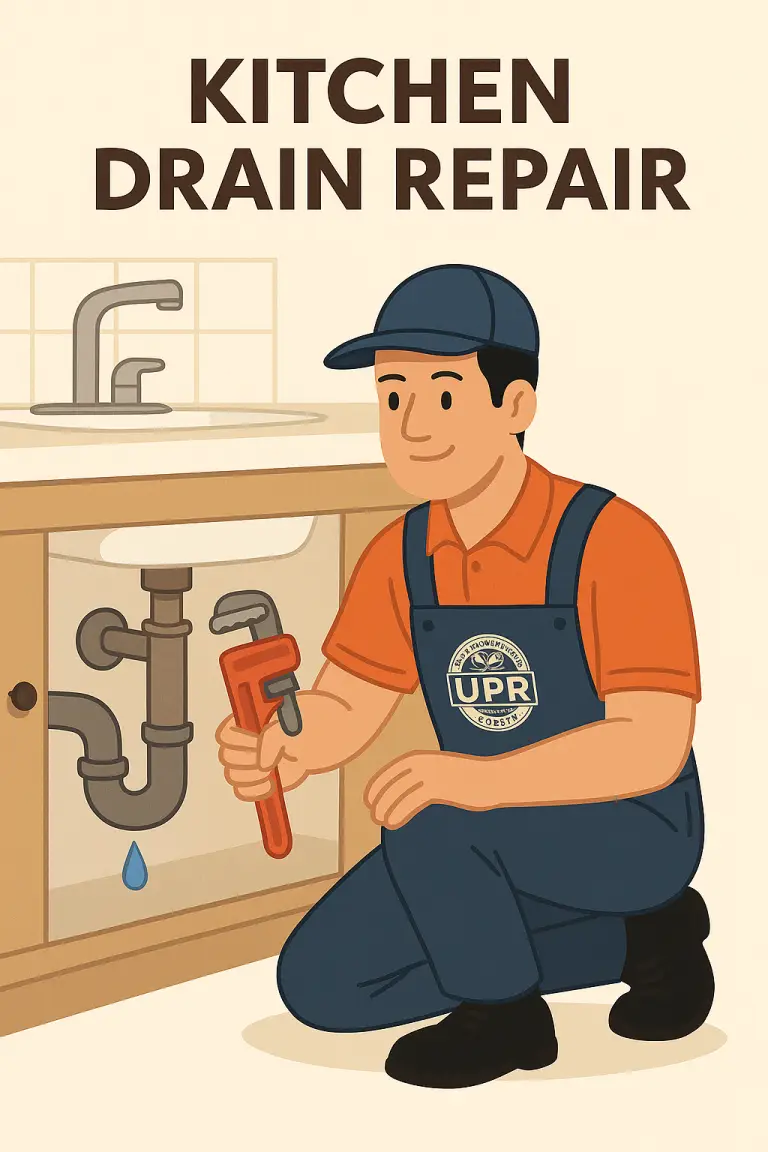
Kitchen Drain Problems Usually Develop Long Before the Sink Stops Completely
The kitchen sink handles a combination of water, food residue, oils, detergents and everyday debris that makes its drainage different from almost any other fixture in the house. Most of that material disappears from view as soon as it passes through the strainer, but leaving the sink does not necessarily mean it has travelled cleanly through the entire branch drain. Small amounts can begin collecting farther along the pipe, where they gradually change how easily wastewater moves.
That is why kitchen drainage problems often develop slowly. Water may begin taking a little longer to disappear after dishes are washed, the sink may occasionally hold water before clearing, or an odour may return even after the visible plumbing has been cleaned. At another property, the first sign may be moisture inside the cabinet or a blockage that seems to appear suddenly even though buildup has been developing out of sight for years.
At UPR (Underground Plumbing Repair), we repair kitchen drains throughout Toronto and the GTA, from exposed trap and under-sink connections to branch drainage concealed behind cabinetry, walls and floors. With more than 20 years of hands-on plumbing and underground experience, we start by determining whether the problem belongs to the visible kitchen plumbing, the concealed branch line or a larger drain farther downstream.
That distinction keeps a simple kitchen problem simple when it should be, while still allowing us to follow the drainage when the symptoms show that the trouble extends beyond the sink.
Grease Changes What Happens Inside the Pipe
Grease is one of the most common reasons kitchen drainage behaves differently from bathroom drainage. Fats and oils may enter the sink while they are warm enough to remain liquid, then cool as they travel through the pipe. Once that material begins coating the inside of the drainage, food residue and other debris can stick to the surface and gradually reduce the usable opening.
The restriction does not necessarily form directly beneath the sink. Wastewater may travel several feet before cooling enough for grease to begin accumulating more heavily, which is why cleaning the trap does not always restore proper drainage. A perfectly clear trap can connect to a branch line that is becoming increasingly restricted behind the wall or below the floor.
Our grease buildup work deals specifically with this behaviour because the condition can progress for a long time before the sink becomes completely blocked. Early on, the homeowner may notice only slower drainage after a large amount of water is released. As the opening becomes smaller, the sink takes longer to empty and ordinary use begins pushing the line closer to a full obstruction.
When the pipe remains structurally sound, the objective is to remove the obstruction without turning a maintenance problem into unnecessary replacement work. The condition becomes a different conversation when repeated buildup is occurring alongside deterioration, poor configuration or another defect that gives material an unusually easy place to collect.
One Kitchen Clog Does Not Automatically Mean Something Is Wrong With the Pipe
Even a properly installed kitchen drain can clog. Enough grease, food residue or another obstruction can restrict an otherwise healthy pipe, and in that situation professional drain snaking may be exactly what the line needs.
A first-time blockage in a kitchen that has drained reliably for years does not automatically justify opening walls or replacing concealed pipe. Once the restriction is removed and normal flow returns, the behaviour of the drain afterward tells us much more about whether anything else needs attention.
Recurring blockages deserve a closer look because the history changes the diagnosis. If the same kitchen branch needs to be cleared every few months despite reasonable use, the pipe itself may be contributing to the problem. Older metal drainage can become rough internally, a poorly configured transition can catch waste, previous repairs can create irregularities, or a section of branch drainage can lose enough grade that material begins settling where it should continue moving.
The important question is therefore not simply whether the kitchen drain is clogged today. We want to know how the line has behaved over time and whether clearing restores dependable drainage or merely resets a problem that keeps returning.
The Plumbing Under the Sink Is Only the Beginning of the Kitchen Branch
The trap and piping visible inside the cabinet are the easiest parts of a kitchen drain to inspect, but they represent only a short section of the complete route. Once the drain enters the wall or floor, the branch continues until it joins larger drainage serving the home.
This concealed section is where diagnosis becomes more important. A restriction immediately after the trap can produce symptoms very similar to one located much farther along the branch, and replacing visible under-sink plumbing will not improve a blockage that is several feet behind the wall.
The layout of the kitchen also influences how that branch was installed. In some homes, the sink backs directly onto a plumbing wall and the route is relatively short. In others, an island sink, relocated kitchen or previous renovation may create a longer drainage run before the branch reaches a larger stack or building drain. The farther wastewater has to travel horizontally, the more important proper slope and clean transitions become.
When repeated trouble points deeper into the branch, we follow the drain far enough to understand what is happening instead of assuming everything underneath the cabinet represents the entire kitchen system.
Water Under the Sink Is Not Automatically a Drain Leak
A kitchen cabinet can contain several possible sources of water in a very small space. Hot and cold supply connections, shut-off valves, the faucet, dishwasher connections, sink strainers, the trap and branch drainage may all sit within a few feet of one another.
Because water can travel along tubing, cabinetry and the outside of piping before dripping from the lowest point, the location of the puddle does not always identify the failed component. Moisture appearing while the faucet is running may come from the drainage, but it can also originate from the faucet body or supply connection. Water appearing only when a full sink is released provides a different clue because the drain is carrying a much larger volume at that moment.
We test the plumbing according to the way the leak appears so the failed connection can be isolated before parts are replaced. If the problem is a localized leaky drain pipe or failed fitting and the surrounding drainage remains sound, the repair can stay focused on that section.
When the leak is concealed behind cabinetry or inside a wall, access may be required to expose enough of the branch for a dependable repair. Even then, the objective is not to open more of the kitchen than necessary; it is to reach enough of the failed piping to repair it properly and confirm that the neighbouring drainage remains suitable to leave in service.
Older Kitchen Drains Can Develop Problems That Cleaning Alone Cannot Correct
Many Toronto and GTA homes contain kitchen drainage installed during different generations of renovation. The visible piping beneath the sink may be newer plastic while older cast iron, copper drainage or another material continues behind the wall or below the floor.
That mixture is not automatically a problem. Different generations of piping can work together reliably when the transitions are appropriate and the existing material remains in good condition. The concern begins when an older section becomes heavily corroded, rough internally, cracked, poorly supported or repeatedly responsible for restrictions.
Cleaning can restore flow through a structurally sound pipe, but it cannot rebuild a failing pipe wall or correct a section that no longer maintains the grade wastewater needs. If investigation shows that the branch itself has become the reason blockages keep returning, replacing the affected section may provide a better long-term result than repeatedly clearing the same condition.
The decision should come from the pipe, not simply from its age. Older drainage that continues performing properly can remain in service, while a newer line installed badly can create trouble much sooner.
Dishwasher Drainage Adds Another Flow Into the Same Area
In many kitchens, the dishwasher discharges into the same general drainage arrangement serving the sink. This introduces another concentrated release of wastewater into a branch that may already be dealing with grease and food residue from everyday sink use.
A restricted kitchen line can therefore show symptoms when the dishwasher operates even if the sink itself seemed acceptable shortly beforehand. Water may rise temporarily in the basin, drainage sounds can become more noticeable or an existing restriction can become obvious when the appliance sends a larger volume into the branch.
The dishwasher connection itself can also leak, which is why moisture inside the cabinet still needs to be traced rather than automatically blamed on the sink drain. A loose or deteriorated appliance connection is a different repair from a restriction or failed drain fitting farther downstream.
Looking at the way all of the kitchen components use the same drainage helps separate an appliance-level problem from a branch-line problem before unnecessary work begins.
When the Kitchen Is the Only Fixture Affected
If every other fixture in the house drains normally and only the kitchen sink is slow or blocked, the kitchen branch is the logical place to begin. The problem may be close to the sink or farther along that branch, but there is little reason to assume the entire building sewer is responsible without additional evidence.
This is where keeping the diagnosis proportional matters. A kitchen drain that has accumulated grease should not become a main-sewer project merely because larger drainage exists downstream, just as an under-sink connection should not be replaced repeatedly when the actual restriction is deeper inside the kitchen branch.
Where necessary, the branch can be cleared and its behaviour reassessed after normal flow is restored. If recurring trouble, unusual resistance or another condition raises concern about the hidden pipe, a camera inspection may sometimes help where the size and configuration of the line allow meaningful inspection.
The purpose of additional investigation is to answer a specific question created by the symptoms, not to add procedures to every kitchen service call.
When Other Fixtures Begin Reacting, the Problem May Be Farther Downstream
A kitchen branch eventually joins larger drainage serving other parts of the home. Once symptoms begin appearing beyond the kitchen, the location of the problem can change significantly.
If several fixtures are becoming slow at the same time, the kitchen gurgles when another fixture drains, or wastewater begins reacting at a lower basement drain, the restriction may sit beyond the point where the kitchen branch joins the larger system. In that situation, replacing the trap or opening the wall behind the sink will not address the actual obstruction.
The broader drain repair system then becomes relevant because the investigation needs to follow the shared drainage rather than remain focused only on the kitchen. A severe downstream restriction can eventually interfere with wastewater leaving the building altogether and develop into a sewer backup if the line loses enough capacity.
The symptoms determine how far we go. When everything points to the kitchen branch, we stay with the kitchen branch. When several parts of the house begin reacting together, we follow the drainage farther downstream until the shared cause is identified.
Kitchen Renovations Are the Right Time to Look at Hidden Drainage
A kitchen renovation often exposes plumbing that may not be accessible again for many years. Cabinets come out, walls may be opened and fixture locations can change, creating an opportunity to inspect the existing drainage before expensive finishes are rebuilt around it.
That does not mean every older branch should automatically be replaced. If the pipe remains sound, properly graded and appropriate for the new layout, there is no benefit in disturbing good drainage simply because it is visible.
The situation is different when the exposed line already shows deterioration, questionable previous work or a history of recurring blockages. Correcting that condition while access is available can make considerably more sense than reinstalling cabinetry over a drain that has already been causing problems.
Relocating the sink also changes the drainage requirements. Extending a branch horizontally requires enough elevation to maintain proper slope while coordinating with cabinetry, framing and the connection farther downstream. A layout that looks simple from the finished kitchen can require careful planning behind the wall to keep the drainage working properly after the renovation is complete.
Good Kitchen Drainage Depends on Everyday Use Too
A properly installed drain still benefits from keeping unnecessary grease and food waste out of the system. Wiping heavy grease from cookware before washing and avoiding the routine disposal of cooking oils into the sink can reduce the amount of material available to build up farther along the branch.
That does not mean every clog is caused by homeowner behaviour. Pipe condition, grade and previous installation work all matter, and recurring problems should not be dismissed as simply “putting the wrong things down the sink” when the drainage itself may be contributing.
The point of sensible use is not to make the kitchen drain fragile. A healthy branch should handle normal kitchen wastewater reliably. It is simply easier for any drainage system to remain open when large amounts of material known to accumulate inside pipes are kept out of it where reasonably possible.
When a kitchen continues giving trouble despite normal use, that is a reason to investigate the drainage rather than continue repeating the same temporary correction.
Kitchen Drain Repair Across Toronto and the GTA
UPR repairs kitchen drains throughout Toronto and the Greater Toronto Area for homes dealing with slow drainage, recurring blockages, grease buildup, leaking connections and concealed branch piping that is no longer performing reliably.
Some kitchen problems remain close to the sink and can be corrected without disturbing anything farther downstream. Others develop inside the concealed branch, where years of buildup, deterioration or previous plumbing work can make the same symptoms return even after the line has been cleared.
We begin with the behaviour of the kitchen, trace the drainage as far as the evidence requires and keep the scope tied to what is actually happening. If the branch simply needs clearing, the work can remain straightforward. If one section is leaking, we repair that section. When the condition extends into larger drainage serving the house, we follow it far enough to solve the real problem rather than repeatedly working on the wrong end of the system.
If your kitchen sink is slow, repeatedly clogged, leaking underneath or no longer draining the way it used to, call UPR. We’ll determine whether the problem is at the sink, inside the kitchen branch or farther downstream and repair the part of the drainage system that actually needs attention.
UPR — We don’t fix. We solve.