





Old Cast Iron Can Keep Working Long After It Stops Looking New
Cast iron drainage has been used in homes for generations, and there is a reason so much of it is still underground today. Properly installed cast iron can serve a house for a very long time. Finding old metal pipe does not automatically mean the system has failed, and age by itself is not a reason to replace a drain that is still doing its job properly.
The problem begins when age turns into deterioration.
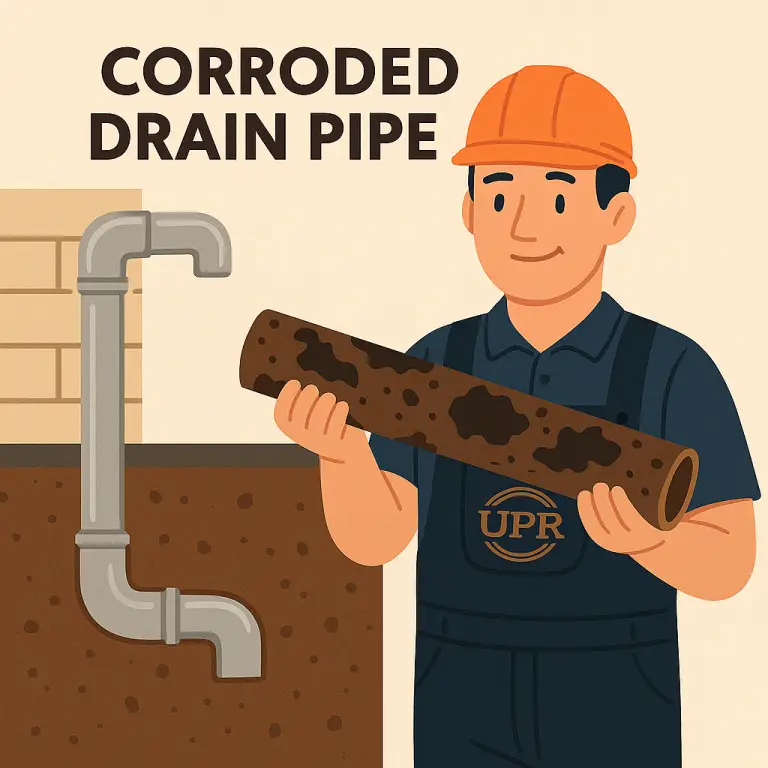
Unlike a plastic drain, cast iron changes as it spends decades carrying wastewater. The inside surface can become rough, scale can develop, sections can gradually thin and areas exposed to moisture can begin showing visible corrosion. The process is usually slow enough that the drainage system continues working while the condition of the pipe changes around it.
That is why corrosion often does not announce itself with one dramatic failure.
The first clue may be a drain that has become more difficult to keep clear. Material that once travelled smoothly through the line begins catching on a rough interior surface. The pipe may still have plenty of structural strength, but the usable opening through it becomes smaller and less forgiving. A homeowner can begin dealing with the same clogged drain repeatedly without realizing that the obstruction is forming inside a pipe that no longer has the smooth interior it once did.
As deterioration progresses, other problems can follow. A weakened section may begin leaking. The bottom of a horizontal cast-iron drain can become particularly deteriorated after decades of use. Connections may become fragile, and eventually a section that has lost enough material can crack or fail altogether.
At UPR (Underground Plumbing Repair), we diagnose and replace deteriorated drain piping throughout Toronto and the GTA. Some of the systems we see have been in service for many decades and are still perfectly capable of remaining where they are. Others have reached the point where repeated clearing and small repairs no longer make sense.
The important part is knowing the difference before deciding what gets removed.
Corrosion Changes the Inside of the Pipe Before the Homeowner Can See It
Visible rust on an exposed piece of cast iron is easy to understand. Underground corrosion is different because most of the drainage system is hidden beneath concrete, behind walls or inside finished ceilings where nobody can watch it age.
From the inside, deterioration can gradually change the character of the pipe.
A relatively smooth passage becomes rougher. Scale and deposits create places where paper, grease and other waste can catch. The inside diameter can become more restricted even though the pipe looks the same size from the outside. Water may continue moving, but solids do not always travel through the line as easily as they once did.
That is one reason older cast-iron drains can develop a history of recurring cleaning.
Mechanical clearing may remove the material that is blocking the pipe and restore drainage again. There is nothing wrong with doing that when the pipe itself remains structurally serviceable. But cleaning does not reverse corrosion. If the interior surface continues deteriorating, the conditions that encourage material to collect remain inside the line.
This does not mean that every rough piece of cast iron has reached the end of its life. Underground drainage does not need to look brand new to work properly. We care much more about how heavily the pipe is deteriorated, whether it is repeatedly contributing to blockages and whether the structure of the line remains reliable.
Corrosion can also become visible in exposed stacks or horizontal drains as flaking, rust, staining or moisture around weakened areas. Those signs deserve attention because deterioration that has progressed through enough of the pipe wall can eventually create leakage.
If wastewater begins escaping from the drainage system, the problem has moved beyond appearance. Depending on where the damaged pipe is located, leakage can affect finished walls, ceilings, floors or areas beneath the basement slab without being immediately obvious from inside the room.
And if deterioration progresses far enough to significantly restrict or structurally damage a main drain, what began as an aging-pipe problem can ultimately contribute to a sewer backup.
The corrosion itself develops slowly.
The day the drain finally fails may not.
A Camera Helps Us Understand the Condition, but Context Still Matters
When the concern is inside an underground or concealed drain, a camera inspection can give us information that simply looking at the exposed ends of the pipe cannot.
A camera can show us whether the interior has become heavily scaled, whether there are areas where waste is collecting, and whether other conditions such as cracks, joint problems or standing water exist along the same line. Just as importantly, it lets us see whether the deterioration appears localized or continues through a much larger section of the drainage system.
That context changes the repair.
If one section of cast iron has deteriorated badly while the pipe around it remains sound, replacing the affected area may be entirely reasonable. There is no benefit in removing healthy drainage simply because some of the system happens to be old.
A different decision may make sense when the camera shows heavy deterioration continuing through a long section of the drain, especially when that line already has a history of recurring blockages or previous repairs. Replacing one small piece in the middle of a system that is failing in several other places can simply move the next problem a few feet farther down the pipe.
The camera is useful, but it is not the entire diagnosis either.
Heavy scaling can sometimes make the inside of an old drain look dramatic while the line continues functioning. On the other hand, a pipe may have deterioration that is more obvious once part of it is physically exposed than it was from the camera image alone.
That is why UPR looks at the behaviour of the drainage system together with what we see inside it.
How often has the line been blocking? Is there active leakage? Has part of the pipe already failed? Is the deterioration concentrated in one area or spread throughout the system? What material comes before and after the damaged section?
Those questions tell us far more than the age of the house by itself.
An old pipe does not owe anybody an apology for being old.
It needs attention when its condition is interfering with the job it was installed to do.
Repairing Corroded Drain Pipe Without Replacing More Than Necessary
When deterioration reaches the point where the pipe needs replacement, the scope should match the condition.
A localized failure can often be handled by exposing the damaged section, removing the deteriorated material and reconnecting the healthy portions of the drainage system with appropriate new pipe. Depending on the location, that may involve opening a wall or ceiling, accessing a vertical stack or excavating beneath a concrete basement floor.
Once the pipe is exposed, we often learn even more about the system.
The visible condition of the cast iron can confirm whether the corrosion is concentrated around one area or whether the surrounding pipe is becoming fragile as well. Previous repairs and transitions between different materials also become easier to understand when we can see them directly.
This is where judgment matters.
If the existing pipe beyond the failed section is solid, we are comfortable leaving it alone. There is no prize for replacing the most pipe.
But when deterioration continues through the drainage run and the homeowner has already been dealing with repeated problems, a larger replacement can make more sense than creating another short connection between sections that are all approaching the same condition.
Modern plastic drainage pipe does not corrode the way cast iron does, which makes it a practical replacement material when aging metal drainage genuinely needs to come out. That does not make cast iron a bad material or plastic automatically superior in every situation. It simply means the replacement system has different characteristics and, when properly installed, eliminates the particular corrosion problem that damaged the original section.
What matters most is the installation.
The new drain still needs proper slope. Connections between old and new materials need to be made correctly. Underground sections need proper bedding and support, and anything hidden behind a wall or beneath concrete needs to be installed with the understanding that we hopefully will not be looking at it again for a very long time.
Replacing a corroded pipe is not just about removing rust.
It is about leaving the drainage system in better condition than we found it.
Corroded Drain Pipe Repair Across Toronto and the GTA
UPR repairs and replaces deteriorated cast-iron and metal drainage throughout Toronto and the Greater Toronto Area, particularly in older homes where parts of the original plumbing may still be doing the job they were installed to do decades ago.
Some houses have cast-iron stacks with newer PVC drainage beneath them. Others still have metal pipe below the basement floor before transitioning to clay outside the foundation. Renovations performed over the years can create systems containing several generations of plumbing, and there is nothing inherently wrong with that when each part remains in good condition.
We do not recommend replacing old piping simply to make every section match.
We look at what is actually failing.
If corrosion is limited to one section, the repair should usually stay focused there. If deterioration continues through the system and is already creating leaks, restrictions or recurring drainage problems, then the homeowner deserves to understand the larger picture before spending money on another temporary repair.
That is what makes pipe corrosion different from an ordinary blockage.
A blockage is something sitting inside the drain that can often be removed.
Corrosion is the drain itself changing.
Cleaning may restore flow. Repair may stop a localized failure. Replacement becomes appropriate when enough of the pipe has deteriorated that continuing to rely on it no longer makes sense.
There is no universal age when that happens.
The pipe tells us.
If you have older cast-iron drainage, repeated blockages, visible deterioration or an inspection that has shown significant corrosion inside the line, call UPR. We’ll look at the condition of the system, explain what is still healthy and tell you whether the problem needs cleaning, a localized repair or a larger replacement.
Good underground work is not about replacing everything old.
It is about knowing what can stay and knowing when something has earned its replacement.
UPR — We don’t fix. We solve.