




A Sump Pump Usually Sits Quietly Until the Day It Matters Most
A sump pump can spend long periods with very little activity and then suddenly become one of the hardest-working systems in the house during heavy rain, rapid snowmelt or periods of elevated groundwater. Because much of that system sits below the basement floor and normally works without anyone watching it, problems are often discovered only when the water in the pit rises and the pump does not respond the way it should.
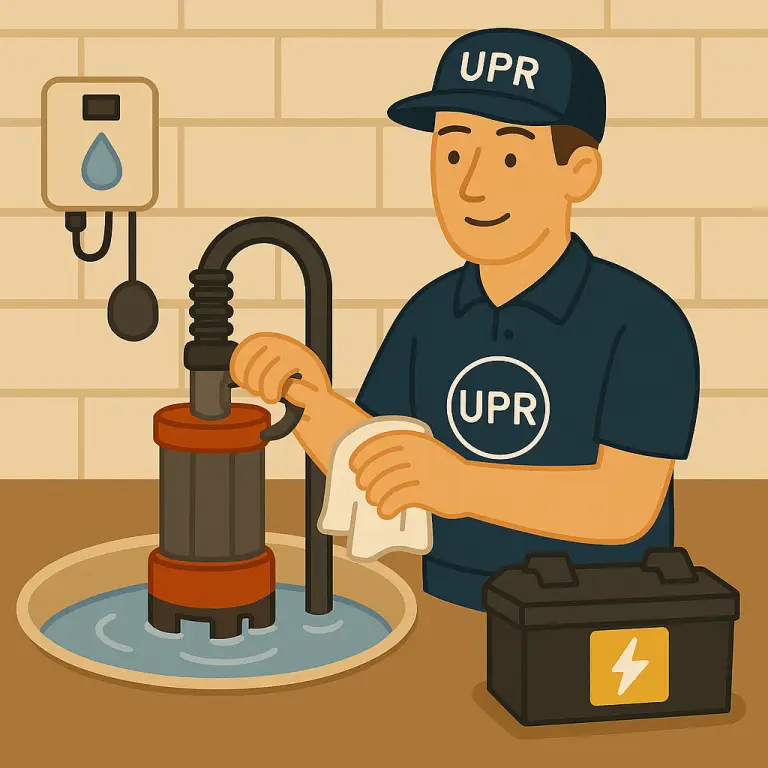
At UPR (Underground Plumbing Repair), sump pump maintenance throughout Toronto and the GTA is about checking the complete pumping arrangement before those conditions arrive. The pump itself matters, but so do the float or level controls, check valve, discharge piping, electrical supply and any backup system connected to it. A pump that turns on during a quick test is useful information, but it does not automatically tell us that every part of the system is ready to move water properly during a storm.
The Government of Canada currently recommends a full sump pump test at least once a year and advises homeowners to check the pump during and after significant rainfall, rapid snowmelt and power outages. Its guidance also recommends confirming that the pump activates, that the discharge is unobstructed and that the check valve is functioning effectively.
The City of Toronto gives similar advice, specifically recommending regular inspection and maintenance of sump pumps according to the manufacturer’s instructions as part of reducing basement-flooding risk.
With more than 20 years of hands-on plumbing and underground experience, UPR looks at sump maintenance as part of the property’s drainage system rather than simply as an appliance check. Water has to reach the pit, activate the pump, move through the discharge piping, pass the check valve and leave the property in a sensible location. A problem anywhere along that path can reduce how effectively the system performs.
Maintenance Is About Finding Problems While the System Can Still Be Tested
A useful sump pump inspection begins with how the system behaves when water enters the pit. The float or level control should be able to move freely and activate the pump at an appropriate water level, the pump should remove the water without unusual behaviour, and the system should shut down normally once the level drops.
The discharge side deserves just as much attention. A restricted or frozen discharge, damaged piping or a check valve that no longer closes properly can interfere with how the system moves water away from the house. The exterior discharge should also be considered because water pumped directly beside the foundation can work its way back toward the same drainage system the pump is trying to relieve. Current federal guidance recommends directing sump discharge away from the foundation and checking that the exterior outlet remains unobstructed.
The condition of the pit can matter as well. Sediment or debris can interfere with moving components in some installations, while a poorly arranged float can catch against piping or another object inside the basin. Where a system includes a Sump Pump Battery Backup, the backup pump, battery, charger and controls should also be considered because the backup cannot provide much protection if nobody knows whether it still activates independently.
This is where maintenance stays separate from Sump Pump Repair & Replacement. Maintenance is the opportunity to test and inspect an operating system and identify developing issues. If the pump is failing, damaged, repeatedly tripping, unable to keep up with normal inflow or otherwise no longer suitable for the installation, the job moves from maintenance into repair or replacement.
We also do not want to pretend that maintenance eliminates every flooding risk. A perfectly functioning sump pump cannot correct a leaking sewer, reverse sanitary flow, failed waterproofing or poor surface drainage by itself. Those conditions belong to other parts of the property, which is why the sump system should be understood as one layer within a broader Flood Protection strategy.
Sump Pump Maintenance Across Toronto and the GTA
UPR provides sump pump maintenance throughout Toronto and the Greater Toronto Area for homeowners who want to know that their existing system is functioning the way it should before heavy groundwater or storm conditions place greater demand on it.
For most systems, an annual full test is a sensible baseline, while pumps that operate frequently or properties with a history of groundwater problems may deserve closer attention throughout the year. The manufacturer’s requirements, age of the equipment and how often the pump operates should all be considered rather than forcing every installation into one fixed maintenance schedule. Canada’s current flood-readiness guidance recommends annual testing and more frequent checks of backup pumps, particularly because backup equipment may sit unused for long periods before being needed.
A maintenance visit is also a good opportunity to understand the system you already have. Homeowners often inherit sump pumps when they purchase a house without knowing where the discharge goes, whether a backup system exists, how old the equipment is or how the foundation drains connect to the pit. Understanding that arrangement now is much easier than trying to figure it out during a storm.
Where the existing system is in good condition, the goal is simply to confirm that and keep it operating. Where testing reveals a weak pump, unreliable control, discharge problem or another condition that needs attention, we can explain whether the issue can be corrected or whether Sump Pump Repair & Replacement makes more sense.
If you have a sump pump but cannot remember the last time it was tested, or you simply want the system checked before the next period of heavy rain, call UPR. We’ll look at the pump, controls, discharge and backup arrangement and let you know what is working, what needs attention and what can be left alone.
UPR — We don’t fix. We solve.