





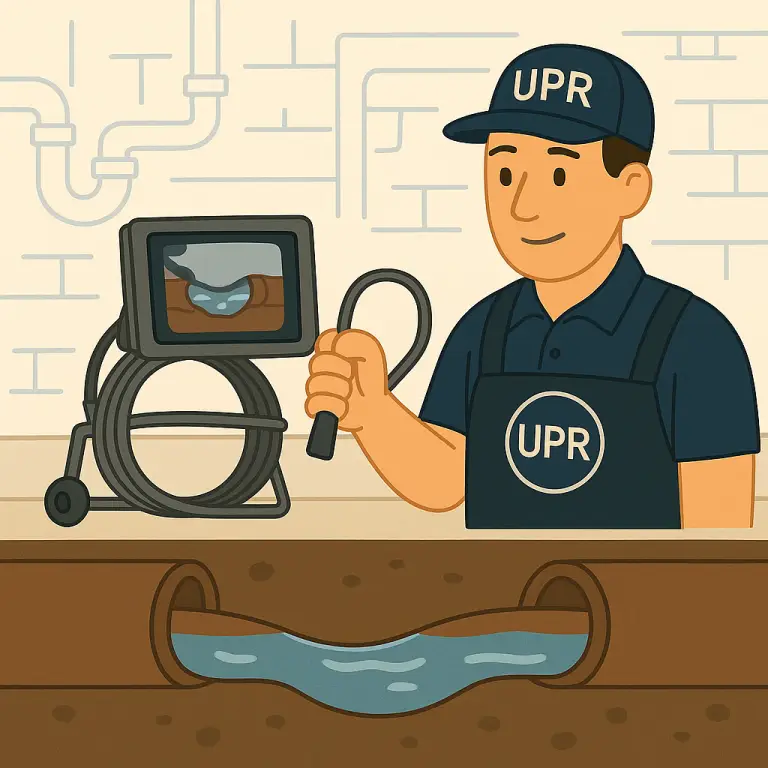
When an Underground Drain Loses the Grade It Depends On
Drainage beneath a home works primarily through gravity. Unlike a pressurized waterline, a drain does not push wastewater toward the municipal sewer; it relies on the pipe being installed at the correct slope so water, paper and waste can continue moving naturally downstream.
When part of that underground pipe settles below its intended elevation, the continuous slope is interrupted. Water begins collecting in the low section instead of draining away completely, creating what plumbers commonly call a sag or pipe belly. The pipe may still be open from one end to the other, and wastewater may continue passing through it, but the line no longer empties the way it was designed to.
A sag can therefore exist long before anyone inside the house notices a serious problem. Toilets may continue flushing and sinks may appear to drain normally because enough water is still moving through the low section to keep the system functioning. Over time, however, the standing water can begin holding paper, solids and other material, gradually creating a location where restrictions are more likely to develop.
At UPR (Underground Plumbing Repair), we diagnose and repair sagging underground drains throughout Toronto and the GTA. Some occur beneath basement floors, while others develop along exterior sewer lines between the house and the municipal connection. The important part is determining how significant the change in grade actually is, what caused the pipe to settle and whether that condition is interfering enough with drainage to justify opening the ground and correcting it.
A Sewer Belly Can Keep Bringing the Same Blockage Back
When wastewater reaches a properly graded drain, the flow helps carry material downstream and leaves relatively little behind. A belly changes that behaviour because part of the pipe remains filled after the main flow has passed. Paper and solids entering that standing water can lose momentum, settle into the low area and gradually reduce the usable space inside the pipe.
This helps explain why some drains seem to develop the same blockage repeatedly. A clogged pipe can be mechanically cleared and return to service, but clearing the obstruction does not change the elevation of the underground pipe. If the belly is deep enough to keep collecting material, the conditions that helped create the blockage are still present after the line has been opened.
That does not mean every recurring clog is caused by a sag. Grease, roots, damaged joints, heavy buildup and other conditions can also produce repeated drainage trouble. What makes a pipe belly different is that the geometry of the line itself has changed, so even a completely clean pipe may still contain a section of standing water once the flow stops.
This is where repair decisions need more than a single camera image. We want to know whether the same location is repeatedly causing trouble, how much of the pipe is holding water, whether solids are accumulating there and what the rest of the line looks like before deciding that excavation is the right response.
Seeing Standing Water on Camera Does Not Automatically Mean the Drain Needs Repair
A camera inspection is one of the best ways to identify a suspected sag because it allows us to see how water behaves inside a pipe that cannot be inspected from the surface. As the camera enters a low section, the lens may partially submerge or disappear completely beneath the standing water before becoming clear again as it travels up the opposite side.
That footage gives us useful information about the approximate location and extent of the belly, but the image has to be interpreted in context. The camera can also reveal whether the pipe around the low area contains cracks, roots, displaced joints, corrosion or another structural condition that may be contributing to the drainage problem.
Some standing water in an underground sewer does not automatically mean the line requires immediate repair. Older drains can contain imperfections, and the decision should come from the complete picture. A shallow low spot in a line that has been functioning reliably for years is not the same problem as a deep belly that repeatedly fills with waste and requires the sewer to be cleared every few months.
This distinction matters because underground drains do not need to look perfect on a camera screen to perform their job. The purpose of an inspection is not to produce flawless footage; it is to determine whether the condition inside the pipe is interfering with dependable drainage.
Why Underground Pipes Begin to Sag
A drain normally holds its grade because the material underneath it provides stable support. If that support changes, the pipe can gradually move with it. Bedding may settle, soil can compact differently from one area to another, backfill from an old excavation can shift or material beneath the line can wash out and leave a section without the support it originally had.
Improper installation can create the same problem much sooner. A pipe that was never adequately bedded or supported may look correct when an excavation is first closed but settle once the surrounding material begins compacting. Even relatively new drainage can develop a belly if the pipe was installed over unstable ground or left bridging an area without consistent support underneath it.
Older properties introduce another factor: time. Many underground drains throughout Toronto and the GTA have been in the ground for decades while foundations, soil, driveways, additions and previous excavations around them have changed. A section of sewer that once held proper grade can gradually shift as conditions surrounding the line evolve.
The cause matters because a lasting repair needs to address more than the shape of the old pipe. If the support beneath the line failed, the new drainage must be installed on a stable base that can maintain the corrected elevation after the excavation is backfilled.
Locating the Belly Before We Open the Floor or Ground
A sagging pipe cannot usually be located accurately just from what is happening at the fixtures upstairs. A basement toilet may gurgle or the main drain may block repeatedly, but those symptoms do not tell us whether the low section is beneath the basement floor, near the foundation wall or farther outside the house.
Camera locating allows the position of the affected section to be transferred from inside the pipe to the property above it. Once the camera is sitting in or near the belly, locating equipment can help establish where that point lies and approximately how deep the drainage is below the surface.
That information becomes particularly valuable when the sewer runs beneath finished areas. Opening a basement floor, driveway or landscaped area is very different from exposing a pipe in an unfinished excavation, so the repair should be planned as deliberately as possible before demolition begins.
We also inspect beyond the obvious low point whenever possible. If one section has settled while the drainage before and after it remains properly graded and structurally sound, the excavation may be kept relatively focused. If the camera shows several grade changes or additional structural problems along the same line, the repair needs to account for what is happening beyond the first belly rather than treating one location in isolation.
Correcting a Sag Means Correcting the Elevation
A true sagging-pipe repair is not simply a matter of removing old pipe and placing new pipe into the same trench. If the replacement follows the same low elevation without rebuilding the support beneath it, the new material may look better while the drainage problem itself remains unchanged.
Once the affected section is exposed, the existing pipe can be removed and the elevations on both sides can be assessed directly. The new section then needs to be installed with a continuous slope that reconnects the upstream and downstream drainage correctly, while the bedding underneath it provides consistent support along the run.
Inside a home, this may require opening the concrete floor and excavating down to the drainage. Outside, the same correction may involve digging over the affected sewer line. In either case, direct access gives us the ability to control the grade physically instead of trying to change the position of a pipe we cannot properly support from above.
This is also the point where conditions that were impossible to see on camera often become obvious. The original bedding may be loose or missing, the soil may have settled unevenly, a previous repair may have been left unsupported or another section of pipe may have shifted alongside the known belly. What we find underneath the pipe helps determine how the base should be rebuilt before the replacement section is installed.
Why Trenchless Repair Is Not Always the Answer for a Belly
Trenchless sewer services are extremely useful when the condition of an underground sewer allows the existing route and grade to be retained. Pipe bursting, for example, can replace damaged underground pipe while reducing the amount of excavation required above it.
A significant belly presents a different problem because the route of the pipe itself is what needs correction. If a replacement pipe simply follows an existing path that contains a low section, changing the pipe material alone does not rebuild the support underneath that section or raise it back to the proper elevation.
For that reason, a method that minimizes excavation is not automatically the best method for every underground repair. When the pipe physically needs to be lifted, re-bedded and set to a corrected grade, exposing the affected section gives the installer control over the part of the system that actually failed.
The goal should never be to avoid excavation at all costs. The goal is to use the repair method that solves the condition underground and gives the drainage a dependable path forward.
A Sag Is Different From a Collapse
A sagging pipe and a collapsed pipe can both interfere with drainage, but they describe different conditions. A belly means the pipe has lost its intended elevation and now contains a low point. The pipe may still be structurally intact and open even though the grade is no longer correct.
A collapsed line has experienced structural failure severe enough that the shape or opening of the pipe itself has been compromised. Wastewater may have difficulty passing through the damaged area regardless of grade because part of the drainage path has physically deformed, broken or fallen inward.
The distinction becomes important when reviewing camera footage because standing water can hide portions of the pipe and make it difficult to understand what is happening beneath the surface. When a camera enters a deep belly and visibility disappears, the line needs to be evaluated carefully before assuming that standing water alone explains every symptom.
It is also possible for more than one condition to exist in the same sewer. Long-term movement may contribute to separated joints, cracks or other failures alongside a sag, which is another reason the surrounding pipe should be inspected rather than making a repair decision from one moment of footage.
Sometimes Monitoring Is the Right Decision
Finding a belly does not automatically create an emergency. If the line continues carrying wastewater reliably, the standing water is limited and there is no history of repeated blockages or other significant problems, monitoring the condition may be more reasonable than immediately opening a finished basement or excavating the property.
The recommendation changes when the belly begins affecting how the sewer performs. A homeowner who repeatedly pays to clear the same main drain because waste continues accumulating in one significant low section is dealing with more than an occasional obstruction. At some point, cleaning restores flow without addressing the condition that keeps allowing material to collect there.
Frequency matters, but so does severity. A drainage system that needed one cleaning after many years of reliable service tells a very different story from one that blocks several times within a short period. Camera findings, the depth and length of the low area, the condition of the surrounding pipe and the history of the sewer all help determine whether repair is warranted.
This is where experienced judgment matters more than automatically recommending excavation whenever a camera gets wet. UPR has more than 20 years of hands-on plumbing and underground experience, and that includes understanding when an imperfection can reasonably remain in service and when the evidence shows that restoring the grade is the better long-term decision.
Sagging Pipe Repair Across Toronto and the GTA
UPR diagnoses and repairs sagging underground drains throughout Toronto and the Greater Toronto Area, including bellies beneath basement floors and along exterior sewer lines. We work with older clay and cast-iron drainage, newer PVC systems and properties where different generations of plumbing have been connected over the years.
The repair begins by understanding how the sewer is performing rather than by assuming that every low point needs excavation. We look at the drainage history, inspect the line, locate the affected section and determine whether the pipe is simply imperfect or whether the loss of grade is creating a recurring problem that cleaning alone cannot correct.
When repair is justified, the job is about restoring more than the pipe itself. The affected section needs the proper elevation, stable support underneath it and a continuous downstream slope so wastewater can move through the area without repeatedly settling into the same low point.
If your main drain keeps blocking in the same area or a camera inspection has shown standing water inside the underground line, call UPR. We’ll determine how significant the sag is, what the surrounding pipe looks like and whether the condition needs repair now or can reasonably be monitored.
UPR — We don’t fix. We solve.