





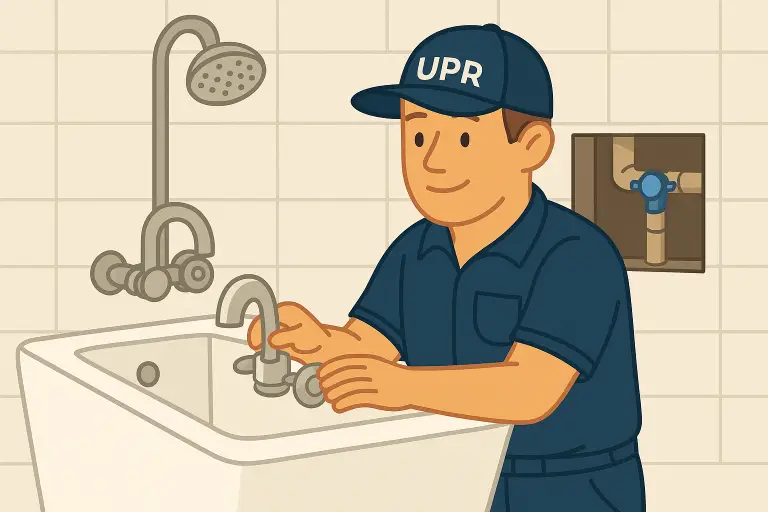
Shower and Tub Problems Can Begin on Either Side of the Plumbing
A shower or bathtub brings pressurized water and drainage together in one finished area, which means a problem can develop before the water reaches the fixture, inside the controls that regulate it, or after the water enters the drain. A dripping shower head, leaking tub spout, poor temperature control and slow tub drain may all happen within the same bathroom, but they do not belong to the same part of the plumbing system.
Water appearing outside the tub or shower can be equally misleading. A failed valve or supply connection behind the wall can release clean pressurized water, while a leaking drain, waste-and-overflow connection or poorly sealed fixture can release water only when the shower or tub is being used. Surface water escaping through deteriorated caulking or enclosure joints can create another path entirely.
At UPR (Underground Plumbing Repair), we repair and install showers and tubs throughout Toronto and the GTA. With more than 20 years of hands-on plumbing and underground experience, we begin by identifying whether the problem belongs to the water supply, the fixture controls, the drainage or the surrounding installation before deciding what needs to be opened or replaced.
That distinction matters because bathroom finishes can hide most of the working plumbing. Tile, drywall, tub surrounds and cabinetry may conceal the valve, supply piping and drainage connections, so diagnosis should come before demolition whenever the symptoms allow it.
Dripping Shower Heads and Tub Spouts Often Begin at the Valve
When water continues dripping from a shower head or tub spout after the controls are fully closed, the fixture outlet is not necessarily the part that has failed. In many installations, the problem begins inside the concealed shower or tub valve where a cartridge, pressure-balancing component, seal or other internal part is no longer stopping flow completely.
Many of these components are designed to be serviced from the finished side of the wall. If the valve body remains sound and the correct replacement part is available, repairing the internal component can restore normal operation without opening the surrounding tile.
The condition becomes different when the valve body itself is damaged, heavily corroded or no longer compatible with available parts. In that situation, replacing the concealed valve may require access through the shower wall, an adjacent room or another practical opening depending on how the bathroom is built.
We decide between cartridge repair and valve replacement from the condition of the assembly rather than from the age of the bathroom alone. A serviceable valve does not need to be removed simply because it is older, while a newer valve with a damaged body may require more than another cartridge.
Temperature Problems Need to Be Separated From Flow Problems
A shower that will not become hot enough, suddenly changes temperature or becomes difficult to adjust can have a problem within the valve itself. Modern shower valves may use pressure-balancing or thermostatic components to help control temperature, and wear or restriction inside those components can affect how hot and cold water are mixed.
Weak flow is a different symptom. A shower head can become restricted by mineral buildup, a cartridge can limit flow through the valve, or one side of the supply can be partially restricted before it reaches the fixture. When several fixtures throughout the house show the same loss of performance, the problem may extend beyond the shower and into the Interior Waterline Repair & Repiping system.
We compare hot and cold performance, check whether the condition affects only one fixture and look at how the rest of the house behaves before assuming the concealed shower valve needs replacement. That prevents a local fixture issue from becoming unnecessary repiping and prevents a broader supply problem from being blamed on one shower cartridge.
The same logic applies during renovations. Installing a larger shower system with multiple outlets can change the amount of water the bathroom expects to receive, so the existing supply should be considered before the finished wall is rebuilt around new fixtures.
Diverters Control Where the Water Goes
Tub-and-shower combinations usually rely on a diverter to send water toward either the tub spout or shower head. Depending on the installation, that diverter may be built into the tub spout, incorporated into the valve or installed as a separate control.
When the diverter no longer seals properly, water may continue flowing from the tub spout while the shower is running, reducing performance at the shower head. A stiff or damaged control can also make switching between outlets difficult or unreliable.
These problems can often be repaired without changing the entire bathroom fixture package, but the correct repair depends on where the diverter is located. Replacing a tub spout will not help when the failed diverter sits inside the wall, while opening the wall makes little sense if the problem is contained in a removable spout.
We identify the configuration first and keep the repair focused on the component responsible for directing the water.
Water Behind the Wall Needs Immediate Attention
A concealed supply leak can release water whenever the plumbing is pressurized, even when nobody is actively using the shower. Other leaks occur only when the valve is opened because the failure sits somewhere downstream of the control.
The timing and location of visible moisture can help separate those conditions. Water appearing continuously may suggest a pressurized connection, while moisture that develops only during shower use can involve the valve outlet, shower arm, tub spout connection, drain assembly or water escaping through the finished enclosure.
Where access is needed, we try to reach the plumbing from the most practical side. An adjacent drywall wall may provide cleaner access than removing finished tile, while some valves can be serviced through an existing trim opening depending on the repair required.
The objective is not to promise that every concealed leak can be repaired without disturbing finishes. It is to diagnose the likely source first and create only the access necessary to repair the plumbing properly.
Tub Drains Have More Than One Connection
A bathtub does not drain through only the visible opening at the bottom. Most conventional tubs also include an overflow connection higher on the tub wall, and both components connect into the waste assembly before wastewater reaches the branch drain.
A leak beneath or around a bathtub can therefore originate at the drain shoe, overflow connection, waste-and-overflow piping or another joint farther downstream. Water may appear only when the tub is filled above a certain level, which is one reason overflow leaks can remain unnoticed during quick showers.
Drainage problems also need to be separated from leakage. Hair, soap residue and other material can gradually restrict the tub branch and produce slower drainage without any failure in the plumbing connections themselves. In those cases, Drain Snaking may be appropriate when the line simply needs to be cleared.
If repeated blockages continue after proper clearing, the branch drainage may need further investigation. A recurring problem should not automatically be blamed on the visible tub drain when the actual restriction may sit farther along the concealed pipe.
Shower Drains Can Leak Above or Below the Finished Surface
A shower drain has to form a reliable connection between the finished shower base or waterproofing assembly and the drainage below. The exact construction varies considerably between prefabricated shower bases, tiled showers and older installations.
Water visible beneath a shower can come from the plumbing drain connection, but it can also originate from the waterproofing assembly around the shower itself. Cracked grout, failed sealant or damaged waterproofing beneath tile can allow water to leave the shower area even when the drainpipe remains completely intact.
That difference is important because repairing the drainage will not solve a failed shower waterproofing system, while rebuilding surface finishes is unnecessary if the leak is coming from one accessible plumbing connection below.
We test the conditions that produce the leak and follow the water path as far as practical before deciding which part of the assembly needs attention. Bathroom water has a habit of travelling away from its original source before becoming visible, so the wet spot alone should not determine the repair.
Fixture Replacement Should Fit the Existing Plumbing
Replacing a shower head or tub spout can be simple when the new fixture matches the existing connection, but larger upgrades require more planning. New shower valves, handheld fixtures, multiple shower heads or different tub configurations may change the location, capacity and control arrangement of the plumbing behind the finished wall.
The existing valve depth also matters because the finished wall thickness determines where trim sits once tile or another surface is installed. During renovation, the valve should be positioned for the actual finished wall rather than merely secured wherever it happens to fit between the studs.
Supply piping may also need to be changed when the fixture layout moves. That work should be completed and tested before the wall is closed so connections remain accessible while corrections can still be made easily.
A fixture upgrade is successful when the plumbing behind it fits the finished bathroom naturally. Good rough-in work should disappear once the wall is closed, leaving controls and outlets where they were intended to be from the beginning.
Tub Replacement Can Reveal Plumbing That Has Been Hidden for Years
Removing an existing bathtub can expose drain connections, supply piping and previous repairs that have not been visible since the bathroom was originally constructed. Some of that plumbing may be perfectly serviceable and can remain in place, while other installations reveal deteriorated fittings, unsupported piping or questionable modifications from earlier renovations.
The fact that old plumbing becomes visible does not mean all of it automatically needs replacement. We look at the condition and configuration of what is exposed and correct the parts that genuinely need attention before the new tub makes those areas difficult to reach again.
The drain location and overflow arrangement also need to match the new fixture. Different tubs can place the waste connection differently, and changing from one style to another may require adjustment of the drainage beneath or beside the fixture.
Planning those details before the new tub is permanently set helps prevent forced connections and awkward offsets that make future service more difficult.
Shower and Tub Work During Bathroom Renovations
Bathroom renovations are the right time to coordinate the fixture layout with the plumbing hidden behind the finishes. Moving a shower, changing a tub location or converting a tub area into a different shower configuration can affect drainage, venting and water-supply routing together.
That is where Washroom Rough-In becomes important. The concealed drains, vents and waterlines need to be positioned according to the final fixture locations before waterproofing, tile and finished surfaces make those connections difficult to change.
A renovation should not automatically become complete replacement of every pipe in the room. Existing plumbing that is properly located and in good condition can often remain, while older or unsuitable sections can be corrected while access is already available.
This approach keeps the scope tied to the renovation instead of using an open wall as an excuse to replace plumbing that does not need replacement. At the same time, it avoids closing expensive new finishes over a known defect that was already visible during construction.
A Slow Shower or Tub Drain Can Remain a Local Problem
Hair and soap residue commonly accumulate in bathroom drainage, and a slow tub or shower does not automatically mean the house has a larger sewer problem. When the sink, toilet and other fixtures continue draining normally, the restriction is often confined to the fixture branch or the drain assembly serving that area.
If several bathroom fixtures begin slowing or reacting together, the location of the restriction can move farther downstream. Gurgling, water rising in another fixture or repeated blockages affecting more than one drain can indicate that the shared branch or building drain needs attention.
In those situations, broader Drain Repair may become relevant because clearing one shower opening will not correct a restriction shared by several fixtures. The behaviour of the surrounding plumbing helps determine whether the repair should remain local or continue farther into the drainage system.
Keeping that distinction clear prevents an ordinary hair blockage from becoming an underground project while still recognizing when the shower is only the first fixture showing symptoms of something larger.
Repair or Replacement Depends on the Condition of the Fixture and Plumbing
Many shower and tub problems can be repaired without replacing the entire fixture. Cartridges, shower heads, tub spouts, diverters and accessible drain components can often be serviced individually when the surrounding plumbing remains sound.
Replacement becomes more practical when the valve body itself has failed, important parts are no longer available, the fixture is physically damaged or a renovation is already changing the bathroom layout. A homeowner may also choose replacement for design or functionality even when an older fixture still works, which is a different decision from replacing something because it cannot be repaired reliably.
We separate those situations because repair and renovation have different goals. A service call should restore a failed component as efficiently as practical, while an upgrade may justify changing the configuration because the homeowner wants the bathroom to function differently afterward.
Neither choice needs an arbitrary age rule. The condition of the fixture, availability of parts, accessibility and future plans for the bathroom provide a much better basis for deciding what makes sense.
Shower & Tub Repair and Installation Across Toronto and the GTA
UPR provides shower and tub repair and installation throughout Toronto and the Greater Toronto Area for leaking valves, dripping fixtures, poor temperature control, weak flow, faulty diverters, leaking drains, slow drainage and bathroom renovations that require new plumbing connections.
Some problems remain entirely inside an accessible cartridge or fixture component, while others involve concealed waterlines, valve bodies or drainage connections behind finished surfaces. We identify which side of the system is responsible before deciding how much access is necessary and whether repair or replacement is the better choice.
For renovations, we coordinate the fixture with the concealed plumbing so valve depth, drainage position and water-supply routing suit the finished layout before the walls are closed. For repairs, we keep the work focused on the failed component whenever the surrounding plumbing remains dependable.
If your shower or tub is dripping, leaking, draining slowly, losing flow or no longer controlling water properly, call UPR. We’ll determine whether the problem belongs to the fixture, valve, water supply, drain or concealed connection and repair the part of the system that actually needs attention.
UPR — We don’t fix. We solve.