





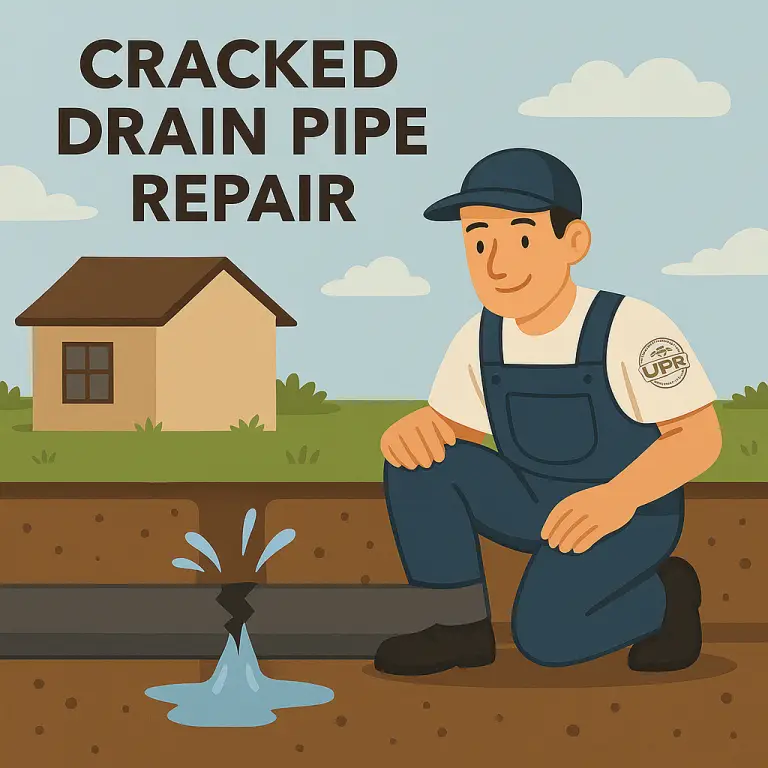
A Cracked Drain Can Keep Working for a Long Time Before You Know It
One of the difficult things about a cracked drain pipe is that the system does not always stop working when the damage begins. Wastewater may continue travelling through the line, the fixtures upstairs may appear normal, and nothing inside the house immediately tells you that part of the pipe underneath the floor or outside the foundation has started to fail.
That can continue for months or even years depending on the location and severity of the crack.
At UPR (Underground Plumbing Repair), we diagnose and repair cracked underground drains and sewer lines throughout Toronto and the GTA. We work with drainage systems beneath basement floors, inside buildings and outside the foundation, where older clay, cast iron and other pipe materials may have been underground for decades before the first visible symptom appears.
A crack does not automatically mean the entire drain needs to be replaced. It does mean the condition of the pipe needs to be understood.
Some cracks remain localized to one section. Others are part of a larger pattern of deterioration, shifting joints or aging material throughout the line. The difference matters because repairing five feet of damaged pipe and replacing an entire sewer are two very different projects.
Our job is to find the damage, understand why it happened and determine how much of the system actually needs attention.
What Happens After a Drain Pipe Cracks
A drainage pipe is supposed to provide a continuous path that carries wastewater away from the house. Once that pipe develops an opening, several things can begin happening that were never supposed to happen inside the system.
Wastewater can escape through the damaged area into the soil surrounding the pipe. Soil or groundwater can interact with the drain from the outside. The inside edge of the crack can begin catching paper, waste and other material moving through the line. If the opening is underground and close enough to vegetation, roots may eventually discover the moisture and begin growing through it.
None of this necessarily creates an immediate complete blockage.
That is why cracked drains can be deceptive. A line may continue moving enough water that the homeowner has no reason to suspect a structural problem. Then the drain begins clogging more frequently, an odour appears, or the same section starts creating trouble every few months.
The crack itself may only be a few inches long, but what happens around that crack can gradually affect the way the entire line performs.
In older clay systems, the damage may also occur near a joint rather than directly through the middle of a pipe section. In cast iron, deterioration can weaken the material until portions of the pipe become increasingly fragile. Different materials fail differently, which is another reason the condition of the drain matters more than simply knowing its age.
The Signs Are Often Subtle at First
There is no single symptom that proves a drain pipe is cracked.
Recurring clogs can point toward structural damage, but they can also come from grease, roots, a sagging line or ordinary buildup. Sewer odours may be related to a damaged drain, but there are other possible causes as well. Slow drainage tells us something is restricting the system, but it does not tell us whether the restriction is caused by debris or the pipe itself.
That is why we try not to diagnose underground plumbing from one symptom.
What gets our attention is the pattern.
A main drain that repeatedly blocks in the same area deserves more investigation than a kitchen sink that clogged once in five years. Several fixtures beginning to drain poorly together tells us something different from one slow bathtub. A sewer that has already been professionally cleared but quickly develops the same problem again gives us a reason to look beyond whatever was removed from inside it.
A crack can also create an opening for root intrusion. Once roots enter the line, they can begin collecting waste and reducing the available opening inside the pipe. In that situation, the recurring blockage may be the symptom everybody notices while the crack that allowed the roots inside remains hidden underground.
If the damage progresses far enough and wastewater can no longer leave the property properly, the problem may eventually develop into a sewer backup.
The important thing is not to assume every clog means a crack or every backup means a broken sewer. The symptoms tell us where to start looking. The inspection tells us what is actually there.
Seeing the Crack Before Deciding How to Repair It
Because most underground drainage systems cannot be examined from the surface, a camera inspection can become one of the most useful parts of diagnosing a suspected cracked pipe.
Once the drain is open enough for the camera to travel through it, we can look directly at the inside of the line. Depending on the condition and visibility inside the pipe, we may be able to identify cracks, open joints, roots, deterioration, standing water or other structural changes that explain why the system has been causing problems.
The camera also gives us something just as important: context.
Finding one damaged section is different from finding damage repeatedly throughout the line. If the pipe looks healthy before and after a localized crack, the repair may be limited to that area. If the camera shows several deteriorated sections, repeated joint problems or widespread damage in an aging drain, repairing only the most obvious crack may not give the homeowner the result they are expecting.
This is why we do not want to decide on the size of the repair before looking at the rest of the system.
Sometimes the camera cannot travel through the entire line because roots, debris or more serious structural damage stop it. That information matters too. Drain inspection is not about producing a perfect video for the homeowner; it is about learning enough about the pipe to make the next decision intelligently.
The less guessing we do before opening concrete or soil, the better.
Why Drain Pipes Crack in the First Place
Underground drains spend decades surrounded by conditions that continue changing long after the installation is finished.
Soil settles. Buildings move slightly over time. Tree roots grow. Older pipe materials continue aging. A section of drain may have been installed with inadequate support, or a later renovation may have changed the conditions around it. What was stable when the house was built may not remain exactly the same fifty years later.
Clay pipe is particularly common in older GTA drainage systems. The material can remain serviceable for many years, but the line is built from individual sections joined together underground. Movement around those sections can place stress on the pipe and joints, creating openings where roots and soil can begin interacting with the drainage system.
Cast iron has a different aging process. Internal scaling and pipe corrosion can gradually change the condition of the pipe and eventually weaken the material itself. What may begin as a rough interior surface can become deterioration serious enough that sections of the drain lose their original strength.
Poor support beneath a pipe can also create problems. Drainage pipe needs a stable base. If soil settles unevenly or a section is left without adequate support, the pipe can experience stress where the surrounding sections remain fixed.
What I would not tell a homeowner is that every cracked drain has one dramatic cause. Usually there is a history underneath it: material, age, movement and underground conditions working together over time.
Understanding that history helps us decide whether we are repairing one unusual failure or seeing the beginning of a larger system reaching the end of its useful life.
Repair the Crack or Replace the Pipe?
This is usually the decision homeowners care about most.
Finding a crack does not automatically mean the entire sewer line has to come out.
If the damage is isolated and the pipe around it remains in good condition, replacing the affected section may be the most sensible solution. The damaged area can be exposed, removed and rebuilt while leaving healthy sections alone. Once the connection is restored and the pipe is properly supported, the surrounding area can be closed again.
The conversation changes when inspection shows that the crack is not really an isolated problem.
An older clay drain may have one obvious cracked section while several nearby joints are already displaced or allowing roots inside. Cast iron may have one section that has opened while the surrounding material is heavily deteriorated. A pipe can also be cracked and sagging at the same time, meaning simply reconnecting the broken area would not correct the way wastewater is moving through the line.
In those cases, a larger repair may make more sense.
The point is not to replace more pipe simply because we already opened the floor. It is also not to repair three feet of drain while pretending the next ten feet are healthy when the camera clearly shows otherwise.
There is a balance between unnecessary replacement and temporary patchwork.
That is where experience underground matters. We look at the damaged section in the context of the entire drain and recommend the scope that makes sense for what is actually there.
What Happens Once the Pipe Is Exposed
When direct repair is required, the affected section needs to be reached.
Inside the house, that can mean opening the concrete floor and excavating carefully down to the drainage line. Outside, access may require excavation along the sewer route depending on where the crack is located.
Once the pipe is exposed, the visible condition can sometimes tell us more than the camera could from inside. We can see how the pipe is supported, how the surrounding soil has behaved and whether the damage is limited to the section we expected.
The failed material can then be removed and replaced with appropriate new drainage pipe, with the connections made properly into the remaining system. The replacement needs the correct slope and proper support because installing a new piece of pipe poorly would simply trade one underground problem for another.
After the repair is complete, the excavation is backfilled and the surface restored.
That restoration is the part everybody eventually sees, but it is not the part that determines whether the repair lasts.
The work underneath matters more.
The bedding around the new pipe matters. The slope matters. The transitions between materials matter. The connections matter. What gets buried matters because once the concrete or soil goes back, that drainage line should disappear from the homeowner’s life again.
That is the standard we care about.
A Crack Is Different From a Collapse
A cracked pipe and a collapsed pipe belong to the same family of structural drain problems, but they are not the same condition.
A cracked pipe can often continue carrying wastewater because the basic shape of the line is still there. The system may leak, admit roots or repeatedly collect debris, but there may still be an open path through the pipe.
A collapse means the structure has failed much farther. The pipe may have deformed, broken apart or closed enough that normal flow is severely restricted or completely stopped.
One can sometimes progress into the other.
A crack that continues deteriorating, a damaged section losing support or a pipe weakened by age can eventually reach the point where the structure can no longer maintain its original shape.
This is another reason early diagnosis has value. Finding a cracked section while the surrounding pipe remains stable can sometimes give us a much more localized repair than waiting until the same area has completely failed.
But there is no benefit in frightening someone into repairing a harmless line just because a camera found an imperfection. The condition, location and effect of the damage all matter.
The goal is to repair a problem because it needs repairing—not because we managed to find one frame of video that looks dramatic.
Cracked Drain Pipe Repair Across Toronto and the GTA
UPR repairs cracked underground drains and sewer lines throughout Toronto and the Greater Toronto Area in homes with very different drainage systems underneath them.
We see older clay lines running toward the street, cast-iron drainage beneath basement floors, previous PVC repairs and combinations of materials installed during different generations of renovation. Some cracks are discovered because a homeowner has been dealing with recurring blockages. Others appear during a camera inspection for an unrelated problem, and some are found only after part of the system has already begun failing more seriously.
Every one of those situations needs context.
If the damage is localized, we want to keep the repair localized. If the surrounding drain shows that a larger problem is developing, we want the homeowner to understand that before the floor or property is restored.
And if the inspection shows that an older pipe is still doing its job despite its age, we are perfectly comfortable leaving it underground.
The objective is not to replace pipe.
The objective is to leave the drainage system working properly when we are finished.
A cracked drain can remain hidden for a long time, but once it begins creating recurring problems, it deserves more than another guess from above the floor.
If your drain repeatedly blocks, roots keep returning, a camera inspection has shown damaged pipe or you have reason to believe an underground line has cracked, call UPR. We’ll locate the problem, look at the condition around it and explain whether the system needs a localized repair or something more.
UPR — We don’t fix. We solve.