





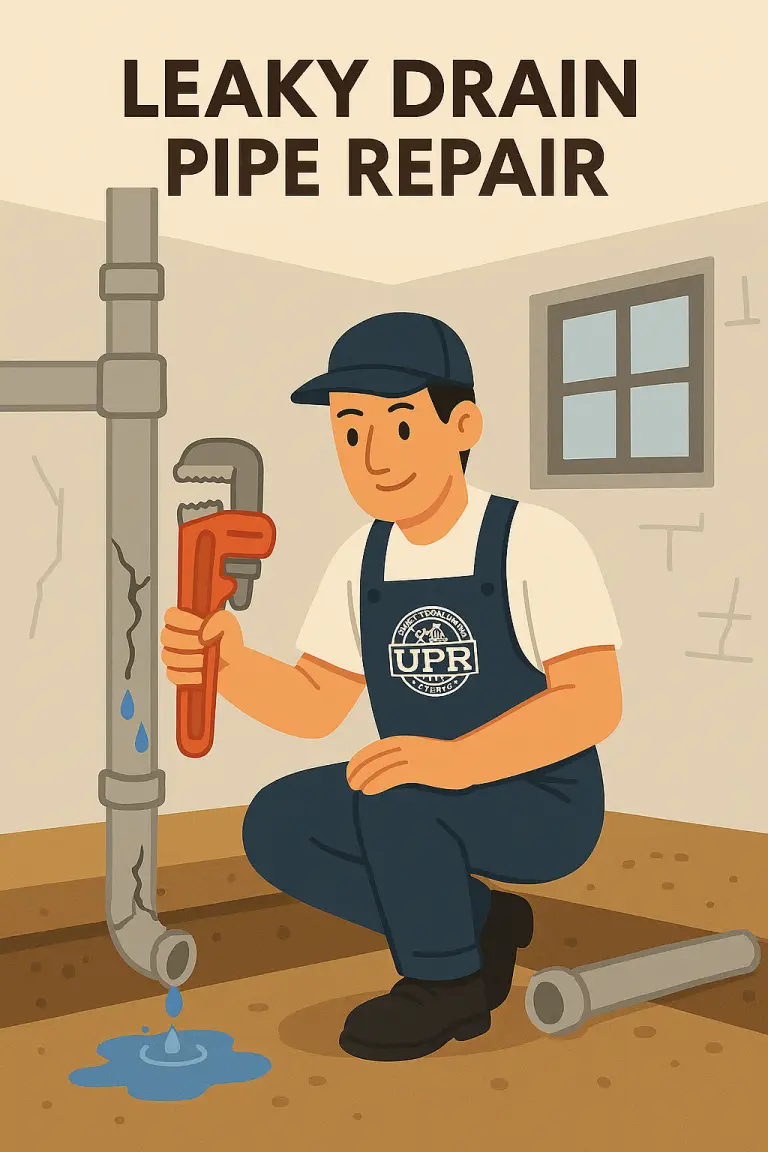
A Drain Pipe Can Be Leaking Without Leaking All Day
A leaking drain pipe behaves very differently from a leaking pressurized waterline. Water-supply piping remains under pressure, so when it fails, water may continue escaping until the supply is shut off. Drain piping works differently because wastewater moves through it only when a sink, toilet, shower, bathtub, washing machine or another fixture is being used.
That difference is one of the reasons drain leaks can remain hidden for longer than homeowners expect. A damaged connection behind a wall may stay completely dry for most of the day and begin leaking every time an upstairs bathroom is used. A pipe beneath the basement floor may release water only when a large amount of drainage passes through it, while another defect may show itself only when a washing machine pumps water into the system.
At UPR, we diagnose and repair leaking drain and sewer pipes throughout Toronto and the GTA. These are wastewater drains, not copper, PEX or other pressurized water-supply lines, and the two systems behave very differently when they fail.
The challenge is therefore not always finding water pouring from a broken pipe in plain sight. More often, it is understanding when the moisture appears, which fixtures are being used at the time and where that wastewater travels after it leaves the fixture. Those details can lead us much closer to the actual failure before finished walls, ceilings or concrete floors are opened.
The Wet Spot Is a Clue, Not Necessarily the Location of the Leak
Water rarely respects the neat boundaries of a finished room. Once it escapes from a drain, it can follow framing, travel along the outside of a pipe, move through insulation or collect on another surface before becoming visible somewhere else. A ceiling stain directly below a bathroom may originate close to that location, but it can also come from a drainage connection several feet away.
The same problem occurs below grade. When wastewater escapes from a drain beneath a concrete floor, the surrounding gravel, soil and concrete can absorb or redirect some of that moisture. An underground leak can therefore exist without producing a clear puddle directly above the damaged section.
This is why visible moisture is only the beginning of the investigation. A basement damp spot may be related to drainage, but it can also come from foundation seepage, groundwater or plumbing located above the area. Sewer odour can point toward a drainage problem, but other plumbing conditions can produce similar symptoms. Before deciding that a buried drain needs excavation, we want the behaviour of the problem to support that conclusion.
One useful clue is whether the moisture changes when particular fixtures are used. If the area remains dry until an upstairs toilet is flushed several times, that tells us something different from water that appears continuously regardless of plumbing use. The more accurately the symptoms can be connected to the drainage system, the more accurately the repair can be planned.
Why Drain Pipes Begin Leaking
Drainage piping is designed to carry wastewater away by gravity, and under normal conditions the system should remain closed from the fixture connection all the way downstream. A leak means that somewhere along that route, the integrity of the pipe or one of its connections has been compromised.
In older drainage systems, the cause may be deterioration that developed gradually over many years. Cast iron can corrode and weaken, particularly along areas that have been exposed continuously to wastewater. Clay drainage can remain structurally sound in some sections while joints between individual pieces shift, open or become vulnerable to root intrusion. Even newer plastic drainage can develop problems when it has been poorly supported, incorrectly connected or subjected to movement around the pipe.
A cracked drain pipe creates a direct opening through the pipe wall, while pipe corrosion weakens the material itself over time. A failed pipe joint is different again because the individual pieces of pipe may remain intact while the connection between them no longer seals properly. These conditions can produce similar symptoms from inside the house, but understanding which type of failure is present helps determine what needs to be repaired.
Movement underground can also contribute. If the soil or bedding supporting a drain changes, one section can settle differently from another and place stress on a connection or the pipe itself. Where movement also changes the slope of the line, leakage may appear together with a sagging drain pipe, creating both a structural problem and a drainage-performance problem.
Finding a Hidden Drain Leak Without Guessing
When an exposed drain is visibly leaking, diagnosis can be relatively straightforward. Hidden drainage is different because the damaged pipe may be behind drywall, above a finished ceiling, underneath concrete or several feet below the ground outside the home. In those situations, opening everything until the pipe is found is not a diagnosis; it is unnecessary destruction.
The investigation begins with how the drainage system is behaving. We look at which fixtures are connected to the affected area, when the symptoms appear and whether there have been previous drainage problems such as recurring blockages, slow flow, sewer odour or backups. That history can help separate one isolated leak from a line that has been developing broader problems over time.
When the concern involves buried drainage, a camera inspection can allow us to examine the interior of the pipe without immediately excavating it. A camera may reveal cracks, displaced joints, corrosion, root intrusion or other structural conditions, and locating equipment can help establish where a particular section sits beneath the floor or outside the building.
A camera still has limitations, and good diagnosis has to account for them. The lens shows the inside of the drain, but it may not capture wastewater actively escaping through every small defect while the camera happens to be passing. What appears on the screen therefore needs to be considered together with the symptoms in the house, the location of the line and the condition of the drainage before and after the suspected failure.
The purpose is not to collect dramatic footage. It is to gather enough information to know where the problem is and how confidently it can be repaired.
Leaks Behind Walls and Above Finished Ceilings
Drain leaks inside finished areas often become noticeable through staining, swelling drywall, damaged paint or moisture around a ceiling penetration. Because drainage in walls frequently includes several connected fixtures, tracing the problem means understanding which part of the system is carrying water when the leak appears.
A bathroom is a good example. Water from the toilet, vanity, shower or bathtub may eventually enter the same drainage stack, but each fixture reaches that stack through its own connection. If moisture appears only when one fixture is used, the failure may be located before those lines join together. If several fixtures produce the same leak, the damaged section may be farther downstream.
Once the location has been narrowed down, access can be created where it is actually useful. The failed connection or damaged section can then be exposed, removed and rebuilt while the surrounding drainage is inspected directly. What looked like a large mystery from outside the wall often becomes much clearer once the correct section of plumbing is visible.
The important part is resisting the temptation to treat the first wet surface as the exact location of the failure. Following the plumbing first can mean the difference between one controlled opening and unnecessary damage across a finished room.
Leaky Drain Pipes Beneath a Basement Floor
Drainage beneath concrete creates a different type of problem because the pipe and everything immediately surrounding it are hidden from view. A homeowner may notice intermittent dampness, odour or another unexplained symptom without having any direct way to inspect the line from above.
If investigation points toward the underground drain, the affected section can be located and the concrete opened in a controlled area. Excavation then gives us something the camera cannot provide: a direct look at the outside of the pipe, the connection that failed and the material supporting the drainage underneath it.
That moment matters because an underground repair should address more than the opening where wastewater escaped. If a joint separated because the surrounding pipe moved, we need to understand what allowed that movement. If the drain has lost support or grade, installing a short new piece without correcting the conditions underneath it can leave the new repair vulnerable to the same forces that damaged the old one.
The repaired section needs suitable bedding and support, proper connections and the correct slope for gravity drainage before the excavation is backfilled. Once those elements are right, the floor can be restored and the plumbing disappears beneath the concrete again.
Underground work is one of the areas where UPR’s more than 20 years of hands-on plumbing and underground experience makes a practical difference. Much of what determines whether a repair lasts is hidden before the concrete is ever poured back.
Exterior Drain and Sewer Leaks Can Be Even Harder to Notice
A damaged drain outside the foundation may continue carrying most household wastewater downstream while allowing some of it to escape underground. Because the leak is surrounded by soil rather than finished building materials, there may be no obvious interior stain or puddle to warn the homeowner.
The condition may first come to attention because another problem develops. Roots can enter through an opening, the line may begin clogging repeatedly, the surrounding ground may behave differently or a camera inspection performed for recurring drainage trouble may reveal a structural defect. In some cases, excavation for another reason exposes a leak that had likely existed for some time.
Once an exterior failure is identified, access and pipe condition become important parts of the repair decision. A short isolated defect in otherwise dependable drainage may justify a targeted excavation, while a line containing several structural failures requires a broader discussion about drain repair and replacement.
What sits above the pipe matters too. A sewer beneath open soil is very different to access from one beneath a driveway, porch, walkway or mature landscaping. The repair method should take those site conditions into account without losing sight of the basic objective: restore a sound drainage path from the house toward the municipal system.
When One Leaking Section Can Be Repaired
Finding a leak does not automatically mean the entire drain needs replacement. If the damaged area can be clearly located, the surrounding pipe is structurally sound and the rest of the line has been performing reliably, repairing one section can be the most sensible solution.
Once the pipe is exposed, we can confirm much more than we could from above. We can see the actual condition of the material, inspect the neighbouring connections and determine whether the failure truly stops where expected. When everything around the defect remains healthy, the repair can stay focused and good existing drainage can remain in service.
There are also situations where opening the pipe changes the picture. An apparently isolated crack may sit beside heavily deteriorated cast iron, or excavation may reveal movement extending farther along the line than the original inspection suggested. In that situation, extending the repair while the pipe is already accessible may make more sense than closing everything over another section that is visibly failing.
The distinction is important because neither extreme serves the homeowner well. Replacing a long stretch of healthy drainage because of one repairable failure creates unnecessary work, while installing a small patch in the middle of obviously deteriorated pipe can simply move the next leak a few feet farther down the line.
A good drain repair is sized to the condition that actually exists once the evidence is put together.
A Leaky Drain and a Clogged Drain Are Not the Same Problem
Drain leakage and drain blockage can occur together, but they are not interchangeable problems. A clog restricts wastewater moving through the pipe, while a leak allows wastewater to escape from the drainage system. One condition does not automatically prove the other.
A restriction can sometimes contribute to leakage by holding water higher in a damaged connection or forcing more wastewater against an existing defect. Likewise, a failed joint can allow roots or surrounding material into an underground pipe and eventually contribute to recurring blockages. When that happens, clearing the obstruction may restore temporary flow without repairing the structural opening that allowed the problem to develop.
This is why repeated drain cleaning deserves context. If a line keeps blocking in the same location, particularly when a camera also shows physical damage, the real issue may extend beyond what drain snaking can solve. Snaking is valuable when the problem is an obstruction; structural repair is required when the pipe itself has failed.
Separating those two conditions prevents homeowners from paying repeatedly to treat a symptom while the damaged drain underneath it continues to deteriorate.
What a Proper Drain Leak Repair Should Leave Behind
The visible part of a drain repair is temporary. Walls are closed, concrete is restored, soil is backfilled and eventually the homeowner may no longer be able to tell exactly where the pipe was opened.
The part that matters is what remains underneath those finished surfaces. Drainage needs proper grade so wastewater continues moving by gravity, secure connections so the repaired section remains watertight and suitable support so the pipe does not settle after the excavation is closed. Where different piping materials meet, the transition has to be appropriate for the installation rather than improvised simply because the connection will eventually be hidden.
We also want the repair to make sense with the surrounding system. A clean new section of pipe does little good if it is installed beside a known structural failure that was ignored while access was available. At the same time, sound existing drainage should not be removed just to make the project look larger.
That balance is what good underground work is supposed to achieve: correct the failed part, deal with the cause where it can be identified and leave dependable plumbing behind when the floor, wall or ground is restored.
Leaky Drain Pipe Repair in Toronto and the GTA
UPR repairs leaky drain pipes throughout Toronto and the Greater Toronto Area, including concealed drainage inside homes, pipes beneath basement floors and underground drainage outside the foundation. Some leaks are discovered quickly because water becomes visible around an exposed connection, while others remain hidden until staining, odour, recurring drainage problems or an inspection finally points toward the damaged line.
Every one of those situations starts with diagnosis rather than excavation. We determine whether the symptoms are actually connected to the drainage system, trace the likely path of the wastewater and inspect the condition of the pipe as far as reasonably possible before deciding where access is needed.
If the problem is one damaged section in otherwise dependable drainage, we keep the repair focused. If the investigation shows that the leak is part of broader structural deterioration, we explain what the surrounding line is telling us and build the repair around the actual condition rather than around the smallest possible opening.
If you suspect a drain pipe is leaking inside your home, beneath the basement floor or underground outside, call UPR. We’ll trace where the wastewater is travelling, locate the damaged section and determine what it will take to make the drainage system sound again.
UPR — We don’t fix. We solve.