





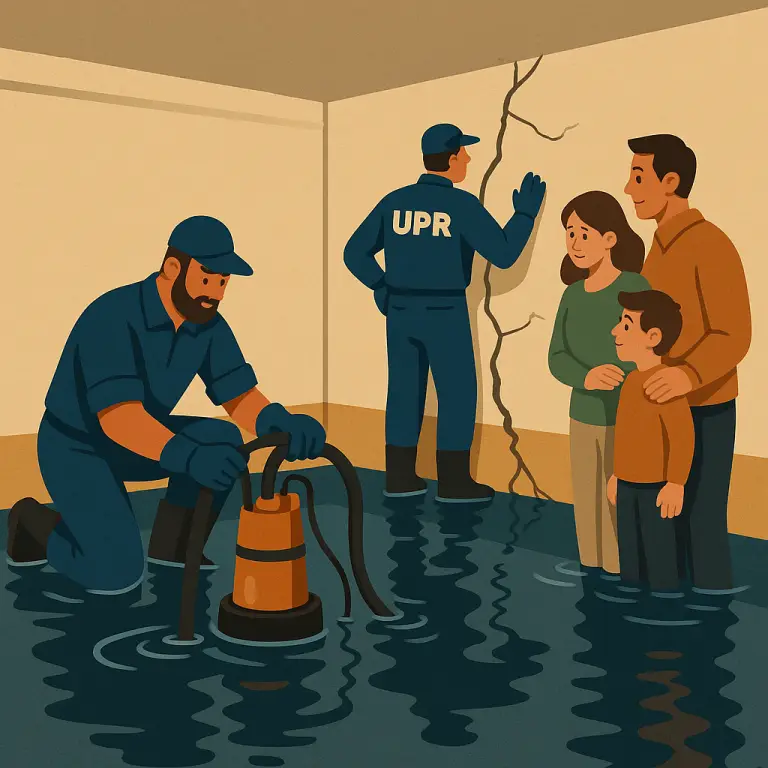
A Flooded Basement Does Not Tell You Where the Water Came From
When water is standing across a basement floor, every source can start to look the same. By the time it reaches the finished space, groundwater, a failed sump system, foundation leakage, a broken waterline and a sewer backup can all leave behind wet flooring, damaged drywall and a room that suddenly feels unusable.
The difference is what happened before the water reached the floor.
A basement can flood because groundwater collected around the foundation faster than the drainage system could manage it. Water can enter through foundation walls or the wall-to-floor connection during prolonged rainfall. A sump pump can stop operating at the worst possible time, allowing the pit to rise until water reaches the basement. A sanitary sewer can back up through a floor drain or plumbing fixture. An interior supply pipe can fail and release water continuously until the line is shut off. Surface water around the property can also find a route toward the house when grading or exterior drainage is working against the foundation.
Those are not interchangeable problems, and the basement should not be repaired as though they are.
UPR approaches basement flooding by first working backward from the water. Where did it appear first? Was the sump pit full? Did water come from a floor drain or plumbing fixture? Is one foundation wall noticeably wetter than the others? Did the event happen during heavy rain, after snowmelt or completely independently of the weather? Is the water clear, or are there obvious signs that the sanitary system was involved?
Those details often tell us far more than the final puddle.
A sewer-related event, for example, immediately changes how the affected area has to be handled because wastewater creates a contamination issue in addition to the physical water damage. That situation belongs with Sewer Backup Restoration, where the drainage problem and the contaminated materials are dealt with together.
A basement that floods because the sump system failed creates a completely different investigation. The pump may have lost power, the float may not have activated, the discharge may have been restricted or the system may simply have been overwhelmed by the amount of groundwater entering the pit. In that case the condition of the Sump Pump System matters just as much as the water already on the floor.
If water is entering directly through the foundation, drying the basement without addressing the wall, drainage or surrounding soil leaves the original path untouched. That is where Basement Waterproofing can become part of the repair.
The point is not to make a flooded basement complicated. It is to avoid making the very common mistake of treating the water you can see while ignoring the route that brought it there.
The Basement Has to Be Read Before It Is Rebuilt
Once the immediate water is under control, the basement starts telling a second story through the materials around it.
Water rarely stops exactly where the visible line ends. It can move underneath flooring, soak into the lower edge of drywall, enter insulation, spread behind baseboards and find low areas beneath finished surfaces. In an unfinished basement, that movement is usually easier to see. In a fully finished space, much of it can remain hidden until materials begin swelling, staining or changing shape.
That does not mean a flooded basement automatically needs to be stripped back to concrete.
A short-lived event in an unfinished space can require relatively limited cleanup. Another basement may have only a shallow amount of visible water but still suffer more extensive damage because the water moved beneath a floating floor or remained trapped behind finished walls for an extended period. The amount of restoration should follow the way the water moved through the room rather than the depth of the puddle alone.
The source matters here as well. Clean supply water from a failed pipe creates a different restoration condition from sanitary wastewater. Groundwater entering through the foundation brings another set of considerations because the material may continue getting wet until the exterior or drainage problem is corrected. Those differences affect what can reasonably remain, what needs to be opened and how soon reconstruction can begin.
Where flooring, drywall, insulation or trim can be dried and retained, there is no reason to remove more simply because the basement flooded. Where materials have deteriorated, remained saturated or are hiding moisture behind them, enough of the area needs to be opened to reach what is actually wet.
That balance is important. Demolition should not become the default response to every flood, but neither should cosmetic repair be used to make a wet basement look finished before the conditions underneath it are ready.
The same applies to concrete. A basement floor may need to be opened when underground plumbing, a failed drain or another system below the slab contributed to the event. Once that work is complete, the restoration should bring the floor back properly instead of leaving the homeowner with a permanent patchwork reminder of the repair.
This is where basement flooding becomes different from a simple cleanup service. UPR can follow the problem into the systems that caused it, whether that means drainage, sump equipment, waterproofing or plumbing, and then bring the affected area back once the reason for the flood makes sense.
A Dry Basement Today Is Only Useful if the Same Problem Is Not Waiting for the Next Storm
After a flood, homeowners naturally want the basement back as quickly as possible. Flooring goes back down, walls are repaired, trim is installed and the space begins looking normal again. That is the visible finish, but the more important decision is what happens before those materials cover the basement again.
If the event exposed a weak sump system, this is the time to deal with it. If water repeatedly reaches the same foundation wall, the drainage and waterproofing around that area deserve attention before the drywall returns. If the sewer backed up, the private drain needs to make sense before a newly finished basement is placed over the same risk. If several of those conditions exist together, one repair should not be presented as though it protects against every type of flooding.
That is why broader Flood Protection Systems can make sense after the original event has been understood. A backwater valve protects against a particular kind of reverse sewer flow. A sump pump manages collected groundwater. Waterproofing controls water entry through the foundation. Exterior drainage moves surface or subsurface water away from the house. Each solves a different part of the problem, and the useful protection comes from applying the right one to the right risk.
Sometimes the answer after a basement flood is surprisingly small. A failed pump is replaced, the affected area is dried and the basement returns to normal. Other properties reveal several weaknesses at once, especially when a major storm pushes groundwater, surface drainage and the sewer system at the same time.
UPR provides basement flooding cleanup and restoration throughout Toronto and the GTA for homes where the water has already entered and the next step is not yet obvious. We look at the event from both directions: what caused the basement to flood, and what did that water actually affect once it arrived?
The restoration should answer both questions before the room disappears behind new finishes again.
If your basement has flooded, call UPR. We’ll trace the source, deal with the systems that contributed to the event and restore the affected area around what actually happened rather than treating every flooded basement as the same job.
UPR — We don’t fix. We solve.