



A Burst Pipe Changes the House Before Anyone Has Time to Think About It
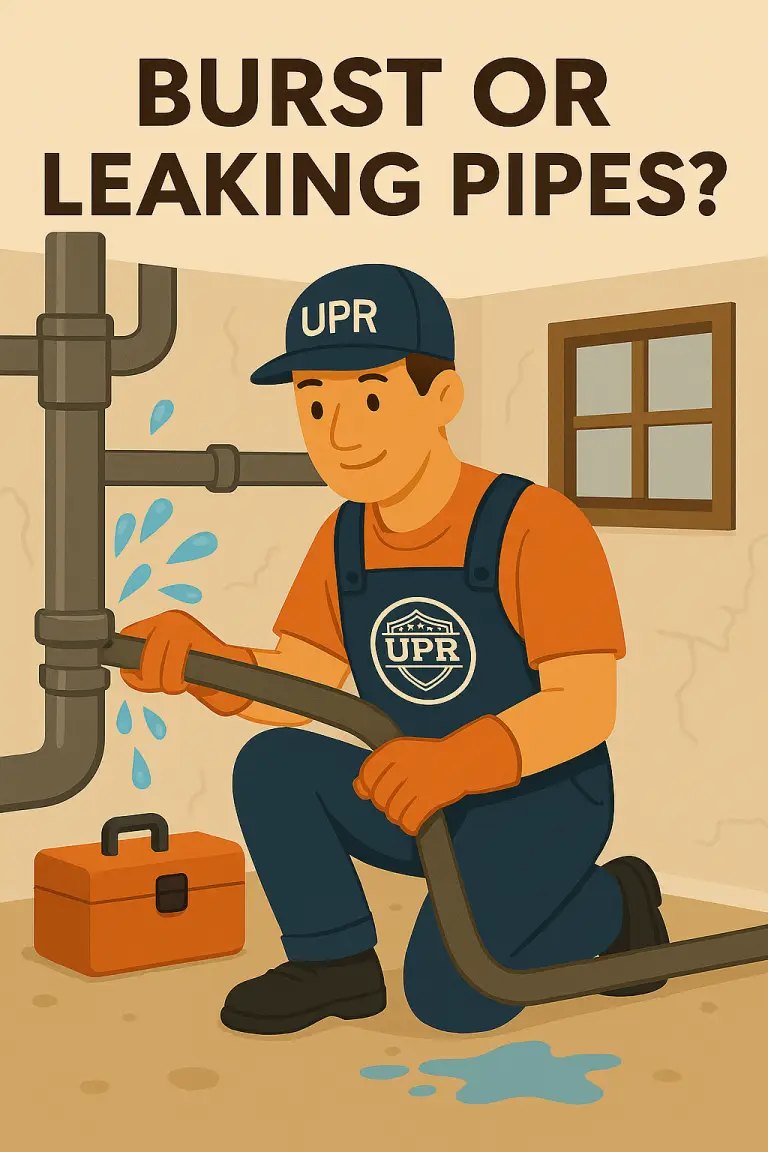
A pressurized waterline does not need much time to create damage once it fails. A split pipe behind drywall, a leaking fitting above a ceiling or a connection that suddenly lets go can release water continuously until the supply is shut off. In some homes the failure is discovered immediately because water is visible on the floor; in others, the first sign appears downstairs as a ceiling stain, around a baseboard, inside cabinetry or in a room that is nowhere near the actual break.
That difference matters because the place where water becomes visible is not always the place where the plumbing failed. Water can travel along framing, follow penetrations between floors, spread underneath finished flooring and collect inside wall or ceiling cavities before it finally reaches an exposed surface. Finding the wet spot is therefore only the beginning of the repair.
UPR starts with the plumbing system itself. The water needs to be controlled, the failed section needs to be located and the surrounding piping needs to be examined closely enough to understand whether the problem is truly isolated. A damaged fitting in otherwise sound piping may require a relatively small repair. A leak that appears after several previous failures, or piping showing broader deterioration, can point toward a system that needs more than another patch.
This is where the distinction between an emergency repair and Interior Waterline Repair & Repiping becomes important. One burst pipe does not automatically mean the house needs to be repiped, but repeated failures should not be treated as unrelated accidents forever. The material, age, installation, condition and location of the surrounding waterlines all help determine whether the repair should remain local or extend farther.
Freezing can also be part of the story. During extreme cold, water trapped inside vulnerable piping can freeze and create enough stress for the pipe to split, sometimes without showing any leakage until thawing begins and normal pressure returns. Where freezing is the reason the failure occurred, simply repairing the split section without considering why that area became cold enough to freeze can leave the same problem waiting for the next winter.
Other failures have nothing to do with temperature. Corrosion, damaged fittings, movement, accidental impact, installation defects or long-term wear can all create leaks in pressurized plumbing. The repair should follow the condition that actually caused the failure rather than relying on a generic explanation because the result happened to be water on the floor.
More than 20 years of hands-on plumbing and underground experience has taught us that the fastest-looking repair is not always the smallest repair. Sometimes the right answer really is one fitting and a short section of pipe. Other times that fitting is simply the first place an aging system finally gave way. The difference becomes clearer once the failed area is exposed and the surrounding plumbing can actually be seen.
Once the Water Is Stopped, the Path It Took Still Matters
Stopping the leak protects the house from additional damage, but it does not remove the water that has already travelled into the building.
A pipe can fail above a finished ceiling and leave insulation wet long after the dripping stops. Water behind a wall can soak the bottom of drywall, move beneath flooring and enter adjacent rooms without ever producing a dramatic flood. A leak inside a cabinet can spread through the base and into the floor below while the plumbing repair itself remains small.
The restoration therefore has to follow the path of the escaped water rather than the size of the pipe that failed.
Some materials recover well when the leak is caught quickly. Others lose their shape, strength or finish once they have absorbed enough moisture. Drywall may need to be opened to reach a concealed repair or allow a wet cavity to dry. Insulation can hold moisture inside a wall or ceiling. Laminate, engineered flooring, trim and cabinet materials can react differently depending on how long they were exposed and how much water reached them.
The goal is not to remove everything around a leak. It is to avoid rebuilding over something that is still wet or damaged.
A small opening made to repair a pipe should remain small when the surrounding conditions allow it. If water has travelled farther, the opening may need to extend far enough to reach the affected material and dry the area properly. That decision should be based on what the water actually did rather than on a standard restoration package applied to every burst pipe.
This is also where a burst waterline differs from a sewage backup. A failed supply pipe normally releases water from the pressurized plumbing system, while sewage entering through a drain creates a contamination problem that requires a different level of cleanup. Keeping those situations separate allows the restoration to match the type of water involved instead of treating every wet wall or floor as the same event.
Where moisture has remained hidden for a longer period, staining, odour or visible growth can sometimes become a second problem after the original leak is repaired. Mould & Moisture Restoration deals with those conditions when the damage is no longer simply about the initial plumbing failure.
Once the plumbing is sound and the affected area has been opened where necessary, dried and evaluated, the finishes can go back. Drywall can be repaired, trim replaced, flooring restored and the room returned to normal use. That sequence matters because a beautifully patched wall does very little for the homeowner if damp material is still sealed behind it.
The Best Repair Leaves the Problem Smaller Than the Damage Made It Feel
Burst pipes feel large because the damage can happen quickly. Water through a ceiling or across a finished floor immediately makes the whole house feel involved, even when the failed section of plumbing is relatively small.
A good repair brings the problem back down to its actual size.
If one connection failed and everything around it remains sound, the work should stay focused. If the failure exposed a section of deteriorated piping that is likely to create the same problem again, it makes sense to discuss more than a localized repair while access is already open. If the water reached several rooms, the restoration should follow the damage without automatically turning the rest of the house into a construction site.
UPR handles burst and leaking pipe repairs across Toronto and the GTA from both sides of the wall. The plumbing failure has to be corrected properly, but the room around it also has to be considered because that is the part the homeowner continues living with after the emergency is over.
That can mean a simple repair behind a small drywall opening, or it can become a larger Restoration Services project when water has travelled through flooring, walls or ceilings. Where the failure came from an appliance supply or connection rather than the main interior distribution piping, Appliance Leak Cleanup & Restoration may be the better fit.
The important part is that the scope grows only when the condition requires it.
There is no value in replacing half of a plumbing system because one isolated fitting failed, and there is equally little value in repairing the same deteriorated piping one leak at a time because each break happens to occur in a different room. The house usually gives enough information to tell those situations apart once the failed section is exposed and the history of the system is considered.
If a pipe has burst, water is leaking inside the home or you have discovered damage that appears to be coming from a hidden plumbing line, call UPR. We’ll locate the source, repair the failed plumbing and deal with the surrounding damage far enough to leave the area ready to be properly closed and finished again.
UPR — We don’t fix. We solve.