





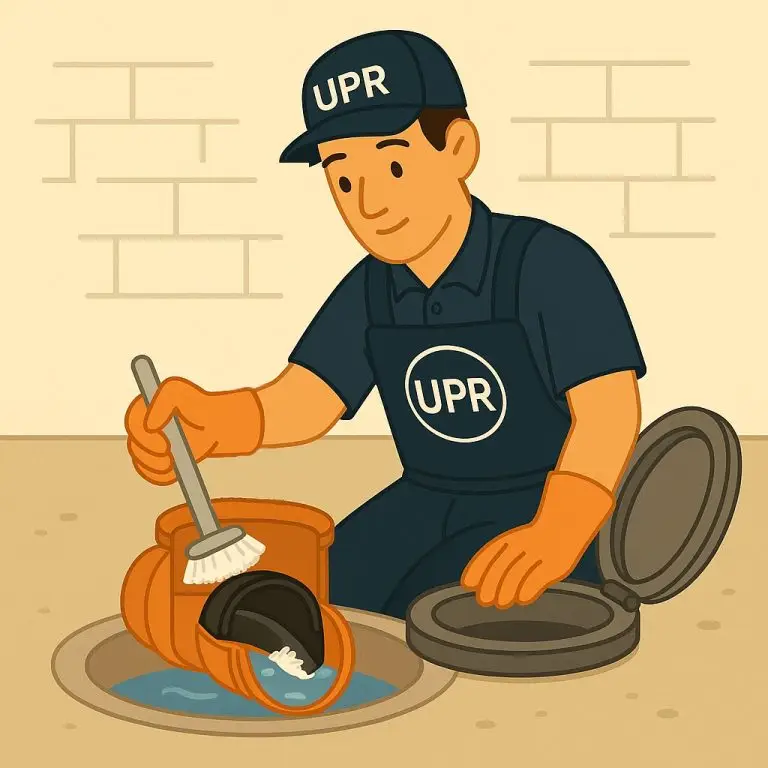
A Backwater Valve Can Sit Quietly for Years and Still Need Attention
A backwater valve is one of those plumbing components homeowners can easily forget because, under normal conditions, it does very little that can be seen or heard. Wastewater leaves the house, passes through the building drain and continues toward the municipal sewer while the valve remains open. There is no pump running, no control panel to watch and usually no indication that anything mechanical is sitting beneath the basement floor.
Its important job begins only when flow attempts to move in the opposite direction. During a sewer surcharge or backup condition, the valve is designed to close and help prevent wastewater from travelling backward through the protected drainage system toward the basement. Once normal conditions return, the mechanism needs to reopen so household wastewater can leave the building again.
At UPR (Underground Plumbing Repair), we provide backwater valve maintenance throughout Toronto and the GTA because that simple movement depends on a mechanical device installed directly in an active wastewater line. Paper, residue, grease and other material can pass through the chamber during normal use, and over time some of that material can accumulate around the valve or its moving components.
Maintenance is therefore not about assuming a problem exists every year. It is about opening a device that may otherwise remain untouched for a very long time, checking its condition, cleaning accessible buildup and making sure the mechanism is still able to move the way it was designed to.
The Valve Has to Stay Open During Normal Drainage and Close When Flow Reverses
A backwater valve has two very different responsibilities. Most of the time, it needs to stay out of the way of normal wastewater leaving the house. If sewage begins moving backward from the downstream sewer, the valve needs to respond by closing the protected drain.
That movement sounds simple, but the environment inside a sanitary drain is not clean. Everything discharged through toilets, sinks, showers, laundry and other connected fixtures eventually moves through parts of the drainage system. Even when homeowners use their plumbing properly, ordinary wastewater can leave residue behind.
The valve chamber is designed so the internal mechanism can operate in that environment, but mechanical movement still benefits from inspection. Buildup around the flap or sealing area can interfere with movement, while a damaged component can prevent the valve from opening or closing normally.
A maintenance visit gives us an opportunity to inspect those accessible parts before an actual sewer surcharge tests them. If the chamber is reasonably clean and the mechanism moves properly, there may be nothing more to do beyond routine cleaning and reassembly. If we find damage, unusual wear or another condition that maintenance cannot correct, we can explain it before the device is needed during a serious event.
Maintenance Begins With Access
A backwater valve cannot be maintained properly if nobody can reach it.
The valve is normally installed below floor level with an access opening that allows the chamber to be inspected without breaking concrete every time maintenance is required. That opening needs to remain usable after the installation is finished and should continue to remain usable even if the basement is renovated years later.
This becomes particularly important in finished basements. Flooring, cabinetry, built-ins and furniture can gradually make the access cover less convenient, and there can be a temptation to conceal it permanently because it interrupts the finished appearance of the room. Doing that turns a serviceable plumbing device into equipment that may require demolition simply to inspect.
A well-planned finished basement can keep the access discreet without eliminating it. What matters is that the cover can still be reached and opened when the valve needs cleaning, inspection or repair.
When UPR installs or services a backwater valve, we look at that future access because maintenance is part of the life of the device. The valve should not only be installed properly underground; it should remain practical to service after the concrete, flooring and finished basement are back in place.
What We Look at During Backwater Valve Maintenance
Once the access is opened, the first priority is understanding the condition inside the chamber. We look for accumulated residue, paper or other material around the accessible mechanism and inspect whether the flap or gate can move freely through its intended range.
The sealing surfaces and accessible components also deserve attention. Material caught where the valve needs to close can interfere with the contact required during reverse flow, while physical damage or deterioration may indicate that cleaning alone is no longer enough.
Maintenance should remain proportional to what we find. A valve that is intact, clean and moving properly does not need to become a replacement project simply because it has been opened for inspection. The purpose of routine service is to maintain functioning equipment, not to create a reason to replace it.
When buildup is present, the accessible chamber and mechanism can be cleaned so material is not left unnecessarily around the moving parts. Once everything is inspected and reassembled, the valve should remain accessible for the next service rather than disappearing beneath new finishes or stored belongings.
Cleaning and Repair Are Not the Same Thing
Routine maintenance can remove accessible buildup and confirm whether the mechanism appears to be operating normally, but it cannot repair every possible problem with a backwater valve.
A damaged flap, broken component, deteriorated seal or another mechanical failure may require parts or replacement depending on the type and condition of the device. The surrounding pipe can also develop problems that have nothing to do with the valve mechanism itself.
This distinction matters because a homeowner may call for maintenance after noticing slow drainage or unusual behaviour and assume the valve simply needs cleaning. If the chamber is clean but the valve is damaged, continuing to treat the problem as maintenance will not restore dependable operation.
The opposite is also true. A dirty valve that cleans up properly does not need to be replaced merely because residue accumulated inside the chamber.
We separate maintenance from repair by looking at what the equipment actually needs once it is open. When routine servicing is enough, we keep it routine. When the physical condition shows that the device can no longer be relied on, the conversation moves into backwater valve repair or replacement.
The Condition of the Main Drain Still Matters
A backwater valve sits inside the drainage system, which means its condition cannot always be considered completely independently from the pipe around it.
If a home has recurring sewer blockages, heavy root intrusion, significant grease buildup or damaged underground drainage, cleaning the valve will not correct those conditions farther downstream. A freshly serviced backwater valve can still be connected to a main drain that needs attention for an entirely different reason.
Likewise, a slow drain does not automatically mean the backwater valve is responsible. The restriction may be somewhere before or after the valve, and the symptoms need to be traced through the system rather than assuming the most visible underground component must be the cause.
If the history points toward a broader drainage problem, camera inspection or other investigation of the main drain may be appropriate. The purpose is not to add unnecessary work to routine maintenance; it is to avoid repeatedly cleaning a valve when the actual restriction sits somewhere else in the sewer.
A backwater valve protects the drain against reverse flow. It does not repair the drain around it.
What Happens When the Valve Actually Closes
During normal use, household wastewater is moving away from the building and the backwater valve remains open. During a sewer surcharge, the situation changes because the valve may close to prevent downstream wastewater from travelling back toward the house.
While the valve is closed, household wastewater on the protected side also cannot pass through that same point normally. Toilets, sinks, showers, dishwashers and washing machines continue creating wastewater if they are used, but the closed valve has temporarily interrupted the route those fixtures normally rely on.
For that reason, water use should be minimized when a backwater valve is known to be closed during a surcharge condition. Continuing normal household use can cause wastewater generated inside the home to accumulate on the building side of the closed valve.
Once downstream conditions return to normal, the valve needs to reopen so drainage can resume. This is another reason free movement matters: the device must be capable of responding in both directions, closing when protection is required and returning to its normal open position afterward.
Maintenance helps keep that mechanism ready, but homeowners should also understand what the valve is doing during the rare event when it actually activates.
A Sewer Backup Is a Good Reason to Inspect the Valve Afterwards
A backwater valve that has experienced an actual reverse-flow event has done the job it was installed to do, but the event can also expose the chamber to material coming from the downstream side of the sewer.
Once conditions are safe and the drainage system has returned to normal, inspecting the valve can provide reassurance that debris has not become trapped around the mechanism and that the accessible components remain in good condition.
The same principle applies after major work on the main drain. If a line has recently been cleaned, repaired or exposed to a significant blockage, inspecting the valve afterward can make sense depending on what happened in the system.
That does not mean every ordinary drainage service requires the valve to be dismantled. We look at whether the event could reasonably have introduced material into the chamber or affected the mechanism before recommending additional maintenance.
The history of the system matters because maintenance is most useful when it responds to how the plumbing has actually been operating.
Regular Maintenance Is More Useful Than Waiting for a Warning Sign
Unlike a sump pump, a backwater valve does not normally cycle on and off where the homeowner can hear it. There may be no obvious warning that residue is accumulating around the mechanism or that the device has not been opened in many years.
That is why periodic maintenance makes sense even when the basement has never experienced another sewer backup. An annual inspection and cleaning schedule provides a practical baseline for many installations, while manufacturer recommendations and the conditions of the individual drainage system should also be taken into account.
A valve serving a household with a history of drainage issues may deserve attention after particular events, while a newly installed system with good drainage may simply remain on a regular maintenance schedule.
The important part is consistency. A backwater valve should not disappear from consideration for ten or fifteen years simply because nothing dramatic happened during that period.
Preventive maintenance gives us the opportunity to find ordinary buildup while it is still an ordinary maintenance issue.
Buying a Home With an Existing Backwater Valve
Many homeowners inherit a backwater valve rather than choosing to install one themselves. The access cover may be visible in the basement, but there may be no service record, invoice or reliable information about when the chamber was last opened.
That situation is common and does not automatically indicate that anything is wrong. It simply means the current condition is unknown.
Opening the valve, identifying the installation and performing an initial inspection creates a new baseline for the homeowner. Once the chamber has been checked and serviced where necessary, future maintenance can follow a more predictable schedule.
This is particularly useful when the basement is about to be renovated. Confirming the location and accessibility of the valve before flooring or cabinetry is installed allows the finished layout to preserve service access instead of discovering afterward that important flood-protection equipment has been covered.
A twenty-minute decision during planning can prevent a much larger problem the first time somebody needs to reach the valve beneath a finished room.
Backwater Valve Maintenance Does Not Replace Flood Protection Around the Rest of the House
A backwater valve addresses one specific flood path: wastewater attempting to reverse through the sewer connection. It does not manage groundwater around the foundation, pump water from a sump basin, waterproof foundation walls or correct poor surface drainage around the property.
That distinction is important because basement flooding can involve more than one source. A home can have a perfectly maintained backwater valve and still experience water through a foundation crack, overflowing window well or failed sump system.
Basement flood protection works best when each risk is identified separately. The backwater valve handles sewer surcharge, foundation drainage handles groundwater around the footing, sump equipment moves collected water where that arrangement is used, and waterproofing deals with paths through the foundation.
Maintaining the valve keeps one important layer ready to perform its job. It should not create a false sense that every possible basement water problem has been addressed simply because one component is in good condition.
Rebates Do Not Change the Need for Maintenance
Many backwater valves in Toronto and surrounding municipalities have been installed as part of basement-flooding protection work, sometimes with assistance from municipal rebate programs. Once installation, inspection and any applicable rebate process are complete, however, the valve becomes a permanent mechanical component of the home’s drainage system.
The paperwork may be finished, but the equipment remains underground.
That means access and maintenance continue to matter regardless of how the original project was funded. Homeowners should retain any information about the installed model when available and continue following appropriate inspection and cleaning practices after the subsidy or installation process is long over.
Where homeowners are considering new flood-protection work, UPR can also help them understand how city rebate programs may apply to qualifying installations. Eligibility and program requirements can change, so those details should be confirmed for the municipality and project involved rather than assumed from a previous installation.
The rebate can help with the cost of qualifying work, but it does not replace responsibility for maintaining the device afterward.
Maintenance Should Leave the Valve Ready and the Area Serviceable
Backwater valve maintenance is usually a relatively small plumbing service, but the standard of the work still matters. The chamber should be opened carefully, accessible debris removed, the mechanism checked and the access returned to a condition that allows the valve to be reached again in the future.
We also want homeowners to know what was found. If the valve is in good condition, there is value in knowing that nothing significant was discovered. If buildup was substantial, the maintenance interval may deserve more attention. If a component appears damaged or another issue is visible in the drainage, that should be explained rather than hidden inside a routine cleaning visit.
The goal is not to make the service sound more complicated than it is. The goal is to leave an important piece of flood-protection equipment in a known condition instead of assuming that everything below the access cover is fine because no sewer backup has happened recently.
Routine maintenance is successful when the valve gets cleaned, checked and then returns to doing what it normally does best: staying unnoticed while the drainage works properly.
Backwater Valve Maintenance Across Toronto and the GTA
UPR provides backwater valve maintenance throughout Toronto and the Greater Toronto Area for valves we originally installed as well as existing systems installed by other contractors.
Some homeowners call because their valve is due for routine inspection and cleaning. Others have recently experienced a sewer surcharge, purchased a house with an unknown maintenance history or are planning a basement renovation and want to confirm the equipment below the floor remains accessible and serviceable.
Whatever brings us to the valve, the objective remains straightforward. We open the accessible chamber, inspect and clean the components that require attention, check how the mechanism is moving and identify any condition that goes beyond ordinary maintenance.
If you have a backwater valve and cannot remember when it was last inspected or cleaned, call UPR. We’ll check the device while the drainage is operating normally, deal with accessible buildup and let you know whether the valve appears ready to continue doing the job it was installed to do.
UPR — We don’t fix. We solve.