





Basement Flooding Does Not Have Only One Cause
When water reaches a basement, the result may look similar regardless of where it came from. Flooring gets wet, finished walls can be damaged and everything stored at the lower level of the home suddenly becomes vulnerable. What matters before choosing any flood-protection equipment is understanding that the water may have reached the basement through completely different systems.
A municipal sewer surcharge can push wastewater backward through the building drain. Groundwater can rise around the foundation and overwhelm drainage at the footing. Heavy rain can expose cracks or weaknesses in foundation waterproofing, while poor grading and concentrated roof runoff can keep sending unnecessary water toward the house from above.
Those conditions do not all respond to the same solution. A backwater valve is designed to deal with reverse sewer flow, but it does not remove groundwater from around the foundation. A sump pump can move collected groundwater away from the house, but it cannot stop sewage from travelling backward through an unprotected building drain. Waterproofing can control water entering through or around the foundation, while surface drainage tries to reduce how much water reaches that foundation in the first place.
At UPR (Underground Plumbing Repair), we approach flood protection by identifying those paths individually and then deciding which ones matter for the property. A strong system is not the house with the greatest number of devices installed; it is the house where the protection matches the ways water can realistically reach the basement.
Sewer Backup Protection Starts in the Building Drain
During periods of heavy rainfall, municipal sewer systems can experience unusually high flows. If conditions allow wastewater to reverse direction through a home’s sewer connection, the lowest plumbing openings in the building can become vulnerable to backup.
A properly installed backwater valve is designed to react when flow in the building sewer attempts to move in the wrong direction. Under normal conditions, wastewater leaves the house through the valve and continues toward the municipal sewer. When reverse flow occurs, the valve closes to help prevent that sewage from continuing back toward the building.
The installation needs to make sense with the actual drainage system. Location, accessibility, the arrangement of connected fixtures and the condition of the surrounding building drain all matter, which is why a valve should not simply be dropped into whichever section of pipe is easiest to reach.
The condition of the sewer itself is important as well. If the building drain is cracked, badly deteriorated, obstructed or affected by another structural problem, installing protective equipment does not repair that underlying condition. When necessary, inspection of the existing drainage should become part of the flood-protection conversation before the valve is installed.
A backwater valve also needs to remain accessible after installation because it contains moving components that require periodic inspection and cleaning. Flood protection is strongest when the equipment can still be reached and maintained years after the concrete has been restored.
Groundwater Protection Works Through a Different System
Groundwater reaches the home from outside the sewer system. Rain and snowmelt enter the soil around the property, and some of that moisture eventually travels downward toward the foundation footing. Foundation drainage is intended to collect this water before it accumulates unnecessarily around the basement.
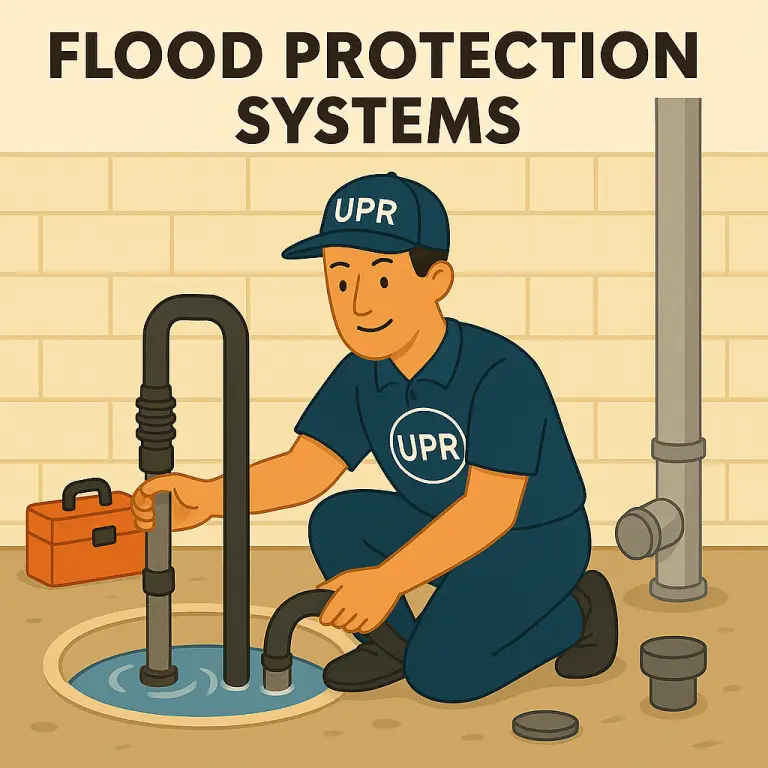
In homes where foundation drainage is directed into a sump basin, the sump pump becomes the mechanical part of that system. Water reaches the pit through the connected drainage, the water level rises and the pump activates to discharge that collected water away from the home.
This means the pump is only one part of the complete path. A powerful new sump pump cannot collect groundwater that is unable to reach the pit because the drainage around the foundation is blocked or disconnected. In the same way, a properly functioning drainage system still needs somewhere reliable to send the water once it has been collected.
When we evaluate a sump system, we therefore look beyond the pump itself. The basin, pump capacity, check valve, discharge route and the way water reaches the pit all influence whether the system can respond properly when groundwater levels increase.
A home that has experienced groundwater flooding needs that full pathway understood. Simply replacing the visible piece of equipment without considering how water reaches and leaves it can miss the larger reason the basement became vulnerable.
Backup Power Matters Because Storms and Power Failures Can Arrive Together
A sump pump normally depends on household electricity, which creates an obvious weakness during severe weather. The same storm that raises groundwater around the foundation can also interrupt electrical service, leaving a perfectly functional primary pump unable to operate when the sump basin is receiving its heaviest inflow.
A battery backup system provides another layer of protection by allowing a separate backup pump or compatible system to operate when normal electrical power is unavailable. Depending on the setup, backup equipment can also provide additional pumping capability if the primary pump fails or cannot keep pace with incoming water.
The backup system needs to be sized and maintained with the same care as the primary equipment. Batteries have finite service lives, pumps need to remain operational and discharge piping needs to allow water to leave properly. Installing backup equipment and then ignoring it for many years defeats much of the reason it was installed.
For homes that depend heavily on a sump system to manage foundation water, losing the pump during a major storm can remove one of the most important parts of the home’s protection. Backup power is therefore not about adding technology for its own sake; it is about identifying what happens to the drainage system if the electricity disappears at exactly the wrong time.
Foundation Drainage Has to Reach Somewhere
Weeping tile or foundation drainage is installed around the lower portion of the foundation to collect water accumulating near the footing. In older homes, the way that drainage was originally connected may differ from what is used in newer flood-protection arrangements, and previous renovations can make the existing setup difficult to understand without investigation.
When foundation drainage is no longer moving water properly, the soil around the basement can remain saturated for longer periods and increase the amount of moisture pressing against the foundation. A sump pump cannot correct that problem if the water never reaches the basin, just as repairing one section of weeping tile will not help if the destination at the other end of the system is not functioning.
This is why the entire route matters. We want to understand where foundation water is being collected, where it goes after collection and what happens during periods of high groundwater.
Where changes to foundation drainage or disconnection from an older connection are appropriate, the new arrangement has to provide a dependable destination for that water. The work should be planned as drainage from beginning to end rather than treating the pipe at the foundation and the equipment inside the basement as unrelated pieces.
Waterproofing Protects the Foundation Itself
Drainage manages water around a foundation, but the wall still needs to resist moisture trying to move through it. Cracks, deteriorated waterproofing and vulnerable wall-to-floor conditions can create paths into the basement even when other pieces of the flood-protection system are functioning.
A localized foundation crack may sometimes be addressed directly when one suitable opening is responsible for the leak. Broader seepage requires a different look because water affecting a larger section of foundation cannot necessarily be solved by sealing individual visible cracks.
Depending on the way water is entering and the accessibility of the property, the solution may involve interior waterproofing or exterior waterproofing. These approaches manage water differently, so the decision should come from the foundation condition and the route the moisture is taking rather than from a preference for one method in every house.
Waterproofing also needs to be considered together with drainage. A good membrane should not be expected to compensate forever for large volumes of preventable surface runoff being directed toward the wall, while better grading alone cannot repair a foundation that already has an established path for water entry.
Each layer has a job.
Surface Water Is the First Layer We Can Control
Some flood protection begins before water ever becomes groundwater. Rain landing on the roof and property immediately begins following the available elevations, and poor surface drainage can concentrate that water beside the foundation instead of allowing it to move away.
Grading and drainage correction can reduce unnecessary runoff toward the house by improving the way surface water travels across the property. Downspout discharge, settled soil, low areas, walkways, patios and driveways can all influence that movement.
Window wells deserve particular attention because they create a low opening beside the foundation. If surface runoff is continually directed into the well, the drainage below can become overwhelmed and water can rise against the basement window. Proper window well drainage works best when the surrounding property is not sending unnecessary water toward the same opening.
Managing surface water does not replace underground flood protection, but it can reduce how hard the below-grade systems have to work. Keeping preventable water away from the foundation is usually preferable to collecting that same water after it has already saturated the soil around the house.
The Systems Work Together Only When the Risks Actually Connect
There are homes where several flood-protection measures genuinely belong together. A property may have experienced sewer backup during major storms while also relying on a sump system to manage groundwater around the foundation. In that situation, a backwater valve and dependable sump protection are responding to two different risks that happen to threaten the same basement.
Another home may have no history or evidence of sewer surcharge but may struggle with groundwater because of its foundation drainage and surrounding soil conditions. Installing equipment intended for a different flood path would not make that property meaningfully safer simply because the product is commonly associated with basement protection.
Looking at these systems together lets us choose protection around the property’s actual risks instead of bundling equipment simply because they all relate to basement water.
This is the part of flood protection that matters most. The equipment should follow the diagnosis. A homeowner should be able to understand what each component is protecting against, why it has been recommended and what part of the water path would remain vulnerable without it.
A Previous Flood Can Tell Us Where to Start
A house that has already flooded gives us valuable information, provided the source can be reconstructed carefully. Where the water first appeared, whether sewage was involved, what the weather was doing, whether the sump pump was operating and how quickly the water rose can all help separate one flooding mechanism from another.
Sewage emerging through a basement drain points toward a very different investigation from clear groundwater entering around the foundation. Water appearing through one crack during prolonged rain suggests something different again, while flooding that coincides with a power failure in a home dependent on a sump pump can expose a weakness in backup protection.
It is also possible for more than one source to be involved during the same major storm. Heavy rainfall can increase pressure on municipal sewers while simultaneously raising groundwater around the foundation, so the fact that a basement flooded once does not always mean one piece of equipment explains the entire event.
That is why we do not begin by deciding what product should be installed. We begin by reconstructing what the water did.
Once the path is understood, the protection becomes much easier to design intelligently.
Not Every Home Needs Every Flood-Protection Device
Flood prevention can become unnecessarily complicated when homeowners are made to believe that every available system needs to be installed together. In reality, the right level of protection depends on how the property is built, how its drainage is arranged, what problems it has experienced and what conditions exist around the foundation.
Some homes primarily need sewer-backup protection. Others depend on reliable sump pumping and backup power, while another property may require foundation waterproofing or improvements to the way water is managed around the exterior.
There are also homes where existing systems are already appropriate but need maintenance, repair or one missing layer of redundancy. Replacing functioning equipment simply because something newer exists does not automatically improve flood protection.
UPR has more than 20 years of hands-on plumbing, waterproofing and underground experience, and that experience is most useful when it helps avoid unnecessary work as well as identify necessary work. We want the protection to make sense when the basement is challenged, not just look impressive on an estimate.
Flood Protection Needs Maintenance After Installation
Protective systems are not something that should disappear from consideration forever once installed. A backwater valve has moving components that can collect debris and needs accessible maintenance. A sump pump should be tested periodically, and a backup battery needs attention because battery capacity changes as the equipment ages.
Discharge lines should also remain clear and able to release water where intended. Window wells can collect leaves and debris, surface drainage can change as soil settles and landscaping evolves, and a drainage arrangement that worked well for years can become less effective after changes around the property.
Maintenance does not need to become complicated, but the homeowner should understand which components deserve periodic attention. Flood-protection equipment is installed for conditions that may occur only occasionally, which means a long period without flooding does not necessarily tell us whether every component is still ready to operate.
The best time to discover that a protective system needs service is during routine inspection, not during the storm that finally calls on it.
Flood Protection and Municipal Rebate Programs
Some municipalities in the GTA offer financial assistance for qualifying basement-flooding prevention work, but eligible measures, funding limits and application requirements are not identical from one municipality to another. Some programs also require steps to be completed before installation begins, so the current requirements need to be checked for the specific property rather than assumed from another city.
UPR can help homeowners understand how proposed flood-protection work relates to available basement flooding rebate programs and what project documentation or inspections may be involved. The rebate can help with the cost of qualifying work, but it should not determine which protection system the property actually needs.
We first identify the flood risk and build the work around that condition. Where an applicable municipal program supports part of the solution, the rebate becomes an additional benefit rather than the reason unnecessary equipment was installed.
Flood Protection Systems Across Toronto and the GTA
UPR designs and installs flood-protection systems throughout Toronto and the Greater Toronto Area for homes with sewer-backup concerns, groundwater problems, sump systems, foundation drainage issues and histories of basement water entry.
Some properties need one protective measure added to an otherwise dependable system. Others have several water paths that need to be considered together, particularly where sewer surcharge, groundwater and foundation seepage have all become concerns during major storms.
Our job is to separate those risks before bringing them back together into a plan. We look at the building drain, foundation drainage, sump equipment, backup power, waterproofing and conditions around the property according to the role each one actually plays.
If you want to strengthen your home’s flood protection or understand why the basement has flooded before, call UPR. We’ll trace the ways water can reach the property, identify which protections already exist and determine what genuinely needs to be added, repaired or improved.
UPR — We don’t fix. We solve.