





A Wet Basement Is a Symptom. The First Job Is Understanding Why It Is Wet.
Water in a basement can look almost identical from inside the room while coming from very different places around the house. A damp area near one wall may be related to a foundation crack, water appearing at the wall-floor joint can point toward groundwater or foundation drainage that is no longer keeping up, and a basement window may be taking on water because the surrounding well cannot drain properly. In another home, the issue may begin outside where the ground slopes toward the foundation and allows rainwater to collect against the house instead of moving away from it.
That is why UPR does not begin every wet-basement call by deciding whether the answer is interior or exterior waterproofing. We first want to understand how the water is reaching the basement and what part of the property is allowing that path to exist. Sometimes the source is obvious from the first inspection. A visible crack can provide a clear entry point, or a window well may fill during heavy rain and make the problem easy to trace. Other situations are less direct because water can travel along concrete, follow construction joints or appear several feet away from where it originally entered.
At UPR (Underground Plumbing Repair), we provide basement waterproofing throughout Toronto and the GTA, but the waterproofing system only makes sense once the source has been understood. A leaking interior waterline is not a waterproofing problem. Wastewater entering through a floor drain during a sewer backup belongs to the drainage system. A sump pump manages collected groundwater, while a backwater valve serves a completely different purpose by helping protect the building drain against reverse sewer flow. Those problems may all produce water in the basement, but they do not need the same solution.
Older homes make that distinction especially important because previous repairs, aging drainage and several generations of renovation can all influence what we see today. The wall visible from inside may have been patched before, the exterior foundation may have been altered or covered by additions, and the drainage around the home may no longer function the way it did when the house was built. Waterproofing becomes much more effective when we stop treating the visible water as the whole problem and start looking at the path that brought it there.
Interior and Exterior Waterproofing Solve the Problem in Different Ways
There is no single waterproofing system that makes sense for every property, because interior and exterior waterproofing approach the problem from different sides of the foundation.
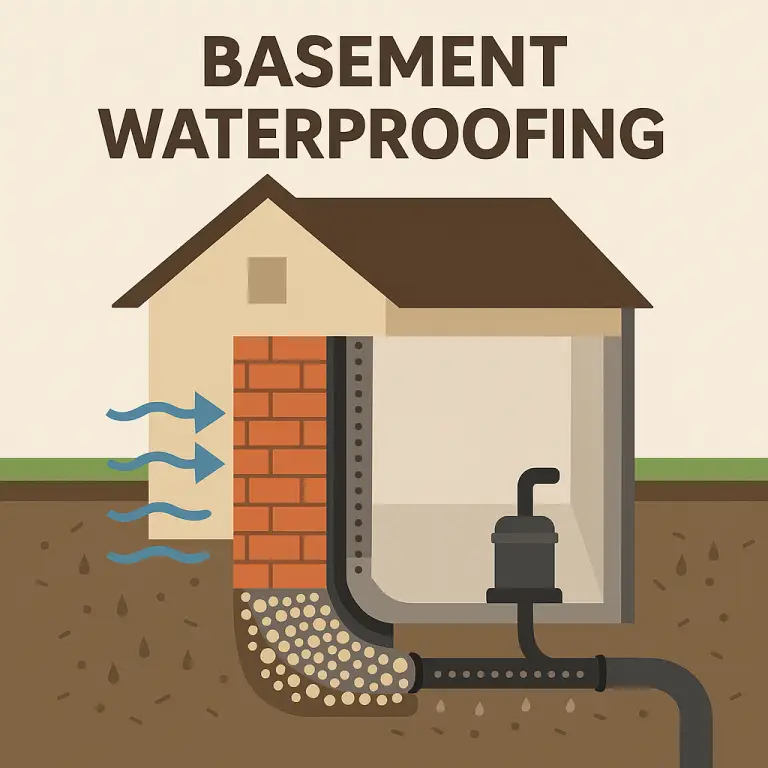
Exterior waterproofing gives direct access to the outside foundation wall. The soil is excavated, the wall can be inspected and repaired where necessary, and a waterproofing and drainage system can be installed before the excavation is closed again. When the exterior condition of the wall is part of the problem and access around the house is practical, working from outside allows the waterproofing to address the surface that is directly exposed to surrounding soil and groundwater.
That does not mean excavation is automatically the best answer for every home. Neighbouring structures, narrow side yards, decks, driveways, additions and other site conditions can all affect what is practical, and some basement water problems are better managed from the inside.
Interior waterproofing works differently. Instead of exposing the outside of the foundation, an interior system is designed to collect water that reaches the inside perimeter and direct it into controlled drainage, usually toward a sump system where the water can then be removed from the home. In that situation, the goal is not to pretend water will never reach the foundation. The goal is to manage it before it spreads across the basement or damages the finished space.
There are also many situations where a complete interior or exterior system is unnecessary. If one clear foundation crack is responsible for the moisture and the surrounding concrete remains in good condition, crack injection may be the more appropriate repair. If the problem is limited to one basement window, window well drainage may deserve attention before anybody talks about waterproofing an entire wall. If surface water is repeatedly collecting beside the house because the surrounding ground slopes toward the foundation, grading and drainage correction may become an important part of reducing the amount of water the foundation has to deal with in the first place.
That is the difference between choosing a waterproofing product and solving a basement water problem. The right repair may involve the wall, the drainage around it or both, and the decision should be based on what the property is actually doing rather than on one preferred method.
Waterproofing and Foundation Drainage Have to Work Together
A basement foundation does not sit separately from the soil and water around it. Rain and groundwater reaching the property need somewhere to go, and the drainage around the home plays an important role in moving that water away from the structure instead of allowing it to remain beside the footing and foundation wall.
When that drainage is no longer functioning properly, the basement can begin taking on more water even if the wall itself has not suddenly changed. Older foundation drainage can become restricted by sediment, soil movement, roots or deterioration over time, and a clogged weeping tile system can allow water to remain around the foundation longer than it should.
In some properties, the surrounding site may also need additional drainage beyond the immediate foundation. A properly planned French drain can help collect and redirect surface or subsurface water where the grading and site conditions make that type of system appropriate. The purpose is not simply to add more drainage because the basement is wet; it is to understand where the water is collecting and create a controlled path away from the structure.
A sump pump often becomes part of that larger drainage picture, especially when water is being collected by an interior system or foundation drainage and directed into a sump basin. The pump’s job is to remove that collected water. It does not seal a foundation crack, waterproof an exterior wall or protect against reverse sewer flow on its own. Each system has its own job, and a house may need more than one of them because groundwater, foundation seepage and sewer backup are different risks even though they can all affect the same basement.
This is one of the reasons UPR works across waterproofing, drainage and underground plumbing. A wet basement does not always stay inside one service category. If the problem begins with foundation drainage and ends at a sump system, we can follow that path. If what looked like groundwater turns out to be a plumbing leak, we can follow that instead. The diagnosis should follow the house rather than forcing the house to fit the first service name that sounds close.
UPR provides basement waterproofing and foundation-drainage solutions throughout Toronto and the Greater Toronto Area for homes dealing with recurring seepage, groundwater, foundation leaks, window-well problems and drainage conditions around the property. Some projects begin after one major storm, while others begin with something much quieter: a damp corner that keeps returning, a dark mark that appears after rain or a basement wall that has slowly begun showing moisture after years without trouble.
We do not assume all of those homes need the same solution. If one crack is responsible, the repair should remain focused there. If grading and drainage are directing water toward the house, that condition deserves attention. If groundwater needs to be collected and managed from inside, an interior system may make more sense, and when the exterior foundation genuinely needs to be exposed and protected, exterior waterproofing gives us direct access to the part of the structure dealing with the surrounding soil and water.
The finished work may eventually disappear behind soil, concrete, drywall or a finished basement wall. What matters is that the system underneath those surfaces was chosen because it matched the way water was actually reaching the home.
If you are seeing water, dampness or recurring moisture in your basement, call UPR. We’ll look at where the water is appearing, how the property handles drainage and what part of the foundation or surrounding system actually needs attention before deciding how the basement should be protected.
UPR — We don’t fix. We solve.