





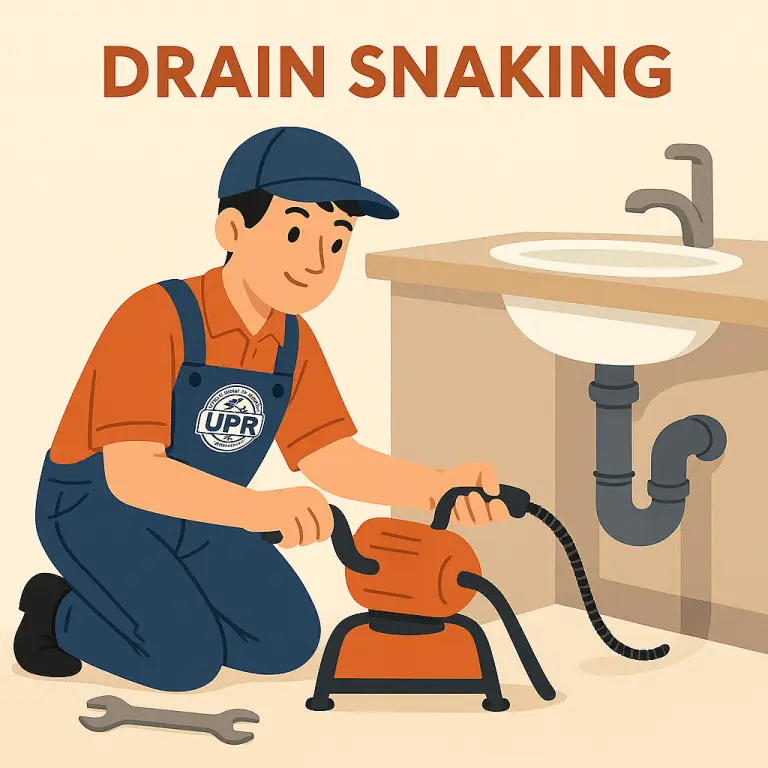
When the Pipe Is Healthy but Something Is in the Way
Not every drain problem needs excavation, a camera inspection or a section of pipe replaced. Sometimes the drainage system itself is perfectly capable of doing its job, but something inside the line is preventing water from moving the way it should.
That is exactly where drain snaking belongs.
At UPR (Underground Plumbing Repair), we provide professional drain snaking throughout Toronto and the GTA for everything from slow kitchen and bathroom drains to larger blockages affecting floor drains and main drainage lines. The purpose is straightforward: reach the obstruction with the right mechanical equipment, clear enough of it from the pipe to restore proper flow and determine whether the drain behaves normally afterward.
The simplicity of the service is one of its strengths. When a healthy drain is blocked by ordinary buildup, there is no reason to turn a straightforward clearing job into something larger.
But there is also an important difference between opening a drain and understanding a drain that keeps closing again.
A blockage that happens once may simply need to be cleared. A blockage that keeps returning may be telling us that the problem is no longer just what is sitting inside the pipe.
What Drain Snaking Actually Does
Professional drain snaking uses a flexible cable driven through the drainage system with equipment designed for the size and type of line being cleared. Different cutting, boring or retrieval heads can be used depending on what we are dealing with and how far into the system the obstruction is located.
As the cable travels through the pipe, the working end reaches the restricted area and mechanically breaks through, cuts into or removes the material preventing normal flow. Once a path has been restored, water can begin moving through the drainage system again.
That sounds simple because, in principle, it is.
The experience comes from knowing what equipment belongs in a particular pipe, how aggressively it should be operated and what the behaviour of the cable is telling us as it moves through the system.
A small bathroom drain and a main building drain are not the same job. Neither are a soft obstruction made from hair and soap, a kitchen line heavily restricted by grease or an underground sewer containing roots.
Drain snaking works best when the equipment is matched to the drain rather than treating every blockage with the same machine and hoping for the best.
The objective is not simply to force a cable through until water disappears. It is to clear the obstruction effectively while respecting the condition of the drainage system we are working in.
Different Drains Develop Different Kinds of Blockages
The material inside a clogged drain usually reflects how that part of the plumbing is used.
Kitchen drains can gradually become restricted by fats, oils, food residue and years of material collecting along the inside of the line. A kitchen sink may continue draining for a long time while the usable opening inside the pipe becomes smaller, which is why the problem often begins with water moving slightly slower before the drain becomes seriously restricted.
Bathroom sinks, tubs and showers usually deal with a different combination of hair, soap residue and everyday debris. These blockages are often closer to the fixture and can frequently be cleared mechanically without anything being wrong with the pipe itself.
Laundry drains carry large volumes of water and can collect lint and residue over time, while floor drains may sit unused for long periods until another condition in the drainage system suddenly makes them important.
Toilets are different again. A blockage may be close to the fixture, farther down the branch line or part of a larger restriction affecting several fixtures. The behaviour of the rest of the plumbing helps tell us which situation we may be dealing with.
Main drains bring everything together.
When the principal drainage line becomes restricted, the symptoms can appear throughout the house because every fixture eventually depends on that line to carry wastewater away. Toilets may begin gurgling, several fixtures may become slow together or water may appear where it normally should not, particularly at a lower drain.
That is why the first part of professional snaking is not immediately putting a cable into the nearest opening. We want to understand which part of the drainage system is actually affected.
Clearing the wrong line does not solve the right problem.
When Snaking Is All the Drain Needs
There is a tendency in plumbing marketing to make every slow drain sound like the beginning of a disaster.
That is not how we look at it.
A lot of drain blockages are ordinary service problems. Material accumulates, the pipe becomes restricted, we mechanically clear it and the system returns to normal. If the drainage behaves properly afterward and there is no history suggesting something deeper is happening, there may be absolutely nothing else that needs to be done.
That is a successful service call.
We are not interested in finding a reason to open a basement floor because somebody had hair in a shower drain.
The situation deserves more attention when the same clogged pipe keeps causing trouble.
If a line has been cleared several times and repeatedly becomes restricted again, there are two broad possibilities. Either the same type of material continues building up, or something about the pipe itself is creating a place where material can repeatedly collect.
An older metal drain can become rough internally. A joint can shift slightly and catch waste moving through the line. A section of pipe can sag and retain material instead of allowing it to continue downstream. Roots can enter through a damaged underground connection and progressively restrict the available opening.
Drain snaking can reopen many of those situations temporarily because the equipment removes what is blocking the pipe.
What it cannot do is rebuild a damaged pipe.
That distinction is important because there is nothing wrong with using snaking to clear a blockage. The problem begins when repeated clearing is presented as a permanent repair for a structural condition that is still sitting underground.
Once the same drain develops a pattern, we want to understand the pattern.
Main Drains and Tree Roots Need More Respect
Root blockages are one of the situations where professional drain equipment and experience become particularly important.
Older clay sewer systems are built from sections of pipe connected together underground. As the system ages and the surrounding soil moves, joints can develop openings large enough for fine roots to reach the moisture inside.
Once root intrusion begins, it can develop gradually. Fine roots enter first, then expand while collecting paper and waste travelling through the sewer. The line may still drain normally for a while, then begin clogging once every few years, then once a year, and eventually much more frequently.
Mechanical root-cutting equipment can clear those roots and restore an opening through the pipe.
But clearing roots and repairing the place where they entered are not the same thing.
If the line has one isolated entry point while the surrounding pipe remains structurally sound, the long-term conversation may be relatively simple. If roots are entering through several deteriorated joints along an aging sewer, removing them may restore flow without changing the condition that allowed them there.
That does not mean every rooted sewer needs immediate replacement.
It means the homeowner should understand the difference between maintenance and repair.
There are properties where periodic root clearing remains a reasonable approach based on the condition of the line and the homeowner’s plans. There are other situations where the frequency of the blockages and condition of the pipe make continual snaking less sensible than addressing the damaged sewer itself.
The right answer depends on the drain in front of us.
Why Professional Drain Snaking Is More Than Owning a Machine
A drain snake looks straightforward until it is operating inside a pipe you cannot see.
The cable is travelling through bends, fittings and connections while the operator is interpreting resistance largely through the behaviour of the equipment. There is a difference between reaching an obstruction and reaching a fitting. There is a difference between a cable moving normally through a drain and equipment struggling because the pipe itself has changed.
That is one reason professional equipment matters, but experience matters just as much.
The cable size and machine should suit the drain. The working head should suit the obstruction. The equipment needs to travel far enough to actually reach the problem without being operated more aggressively than the condition of the pipe allows.
This becomes particularly important in older drainage systems.
A badly deteriorated pipe, displaced joint or structurally compromised section should not simply be attacked harder because a blockage is difficult to clear. If the equipment is telling us something unusual about the line, sometimes the right decision is to stop and understand what is happening rather than keep forcing the cable forward.
The goal is to clear the drain, not win a fight against it.
This is also why store-bought hand snakes and professional drain equipment should not really be viewed as the same thing. A small hand tool can be perfectly useful for a minor fixture-level blockage, but it has nowhere near the reach or capability required for many larger drainage problems.
There is nothing wrong with a homeowner solving a simple problem themselves when the situation is appropriate.
But when the blockage is deep, recurring, affecting several fixtures or involving a main drain, the job has moved into different territory.
What We Look for After the Drain Opens
The moment water begins moving again is important, but it does not automatically tell us everything we need to know.
After clearing a blockage, we want to see how the drainage system behaves.
Does water now move freely? Does the line accept a reasonable volume without backing up? Have the gurgling or unusual reactions between fixtures disappeared? Does the drain behave like a normal drain again?
When the answer is yes and there is no history of recurring problems, the job may be finished.
If something still does not feel right, or if the same line has a history of repeated blockages, then additional investigation may make sense. That decision should be based on what happened during the clearing and what the drainage system does afterward—not automatically added to every snaking service.
This is one area where UPR’s broader underground experience matters.
We are not only familiar with putting a cable through a drain. We repair the cracks, roots, collapsed sections, failed joints and aging underground piping that sometimes sit behind recurring drainage problems.
That means we can recognize the difference between a line that needed cleaning and a line that may be asking for more attention.
The first one gets cleared and left alone.
The second one gets explained.
Drain Snaking Across Toronto and the GTA
UPR provides drain snaking and mechanical clog clearing throughout Toronto and the Greater Toronto Area for homeowners, businesses and properties with drainage systems of all ages.
Some of the jobs are exactly what they appear to be: a blocked kitchen sink, a slow bathtub, a laundry drain that stopped keeping up or a toilet line that needs to be opened.
Others begin with an ordinary blockage and reveal a history that makes the situation more interesting. The main drain has been cleared every spring for the last four years. Roots keep returning. Several fixtures have started reacting together. The basement floor drain suddenly moves when the washing machine empties.
Those details change how we think about the job.
We still begin with the same objective—restore proper flow.
Then we let the drainage system tell us whether the story ends there.
That is really what professional drain snaking should be. Not turning every clog into a major repair, and not pretending every recurring drainage problem has been permanently solved because the cable made it through one more time.
Sometimes all your drain needs is a proper clearing.
And when it needs more than that, you should know why.
If your sink, shower, tub, toilet, floor drain or main line is slow or completely blocked, call UPR. We’ll clear the obstruction properly, make sure the system is draining the way it should and tell you if there is anything about the behaviour of the line that deserves a closer look.
UPR — We don’t fix. We solve.