





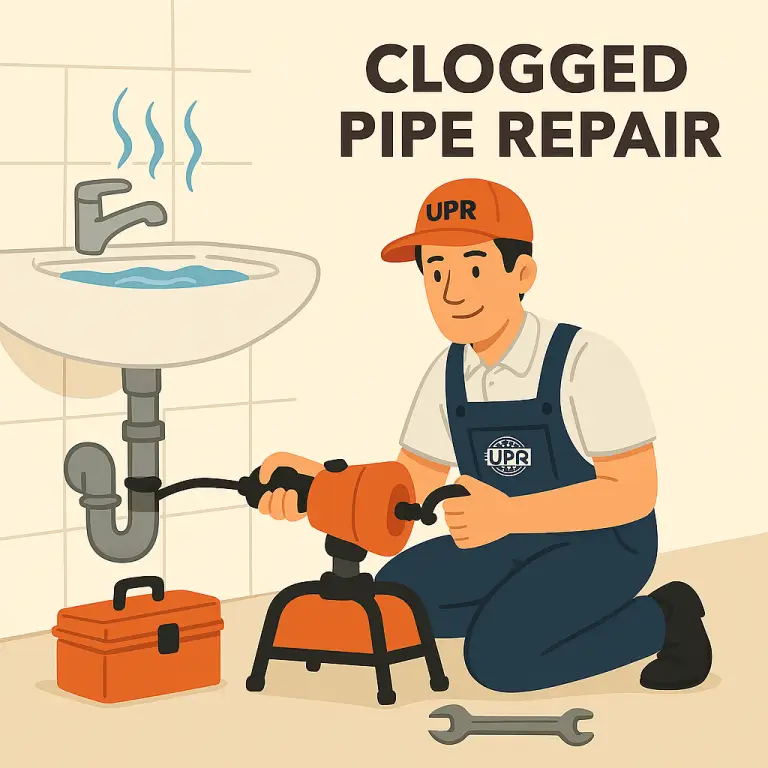
A Clogged Drain Is Usually Simple — Until It Keeps Coming Back
Almost every homeowner deals with a clogged drain at some point. A kitchen sink begins taking longer to empty, water starts sitting in the shower, a toilet suddenly does not flush the way it used to, or a basement floor drain begins making sounds that were never there before. At first, it usually feels like a small problem. Something must be stuck somewhere, the drain needs to be cleared, and life goes back to normal.
Sometimes that is exactly what happened.
But a clogged drain can also be the first visible sign of something happening much deeper inside the drainage system. The difference usually becomes clear when the problem keeps returning, when several fixtures begin acting differently at the same time, or when clearing the line restores flow for a while but never seems to solve the problem for very long.
At UPR (Underground Plumbing Repair), we clear clogged drains and blocked pipes throughout Toronto and the GTA, from ordinary kitchen and bathroom blockages to main drains affected by grease, roots, debris and damaged underground pipe. The immediate goal is always to get the water moving again, but experience has taught us that the more important question is often what caused the blockage in the first place.
A drain that clogs once may simply need to be cleared. A drain that has been cleared repeatedly deserves a closer look.
That is where the UPR approach begins.
The Location of the Clog Tells Us a Lot
Drain blockages usually develop gradually. Material begins collecting inside the pipe, reducing the amount of space available for water to pass through. At first, the difference may be barely noticeable. The sink empties a little slower, the shower leaves water around your feet for a few extra seconds, or the washing machine causes an unfamiliar gurgling sound somewhere else in the house. As the restriction grows, the symptoms become harder to ignore.
What creates that restriction depends heavily on where the drain is located.
Kitchen lines often develop grease buildup because oils, fats and food residue enter the pipe over many years. What begins as warm liquid in the sink can cool farther down the line, cling to the pipe walls and slowly collect more material around it. The drain does not usually stop overnight. The opening simply becomes smaller until the pipe can no longer carry water as quickly as the sink is sending it.
Bathroom drains collect a different combination of material. Hair mixes with soap residue and debris, creating a restriction that often starts close to the fixture. Shower and bathtub drains may become slower over time until standing water becomes part of every use. These types of blockages are often relatively straightforward when the pipe itself is healthy.
Toilets can clog directly at the fixture, but they can also reveal problems farther into the drainage system. If one toilet blocks while everything else works normally, the issue may be local. If several toilets, floor drains or other fixtures begin reacting together, we start thinking about the larger drain they share.
That distinction matters because one slow sink and an entire house draining poorly are not the same plumbing problem.
When several fixtures begin changing at once, the blockage may be farther downstream in the main drain. A toilet may gurgle when a bathtub empties. Water may rise in a basement floor drain when the washing machine discharges. A sink on one floor can suddenly affect plumbing somewhere else in the house. Those connections are telling us that several fixtures are trying to use the same restricted pipe.
The symptom may appear in one place, while the actual problem is twenty or thirty feet away.
Clearing the Drain Comes First
For many clogged drains, professional drain snaking is exactly the right place to start.
A properly selected drain snake or auger can reach into the line and break through or remove the obstruction so normal flow can return. The equipment used for a small sink drain is very different from what may be needed for a main sewer line, and the type of head or cable used depends on what we are trying to clear.
When the blockage is ordinary buildup and the drainage system is otherwise healthy, there is no reason to make the job more complicated than it needs to be. Clear the pipe, restore the flow and let the system go back to doing what it was designed to do.
Not every clogged drain needs a camera. Not every blockage means the pipe is damaged. And certainly not every slow sink should become a drain-replacement project.
Sometimes a clog really is just a clog.
The problem begins when clearing it becomes temporary.
If the same line keeps blocking, we need to understand whether the material is simply building up again or whether something inside the drainage system is helping that blockage form. Heavy grease may be coating the inside of a kitchen line. An older section of cast iron may have become rough internally as it aged. A displaced connection can create an edge that catches material passing through the pipe. A sagging section can hold water and debris. Underground roots can enter through a crack or failed joint and slowly turn a small restriction into a complete obstruction.
In those situations, drain clearing still matters because we need to restore flow, but it stops being the whole answer.
When the Same Clog Keeps Coming Back
One of the most common things homeowners tell us is that somebody already cleared the drain.
Sometimes it was six months ago. Sometimes it was last year. Sometimes the same line has been opened repeatedly for years.
That history matters.
If a kitchen drain keeps clogging because grease continues entering it, the solution may simply be better cleaning and different habits afterward. But when a main drain repeatedly blocks despite normal use, the drain itself deserves attention.
Tree roots are a perfect example. In older clay sewer systems, the pipe is built in sections joined together underground. Over decades, those joints can shift, deteriorate or develop small openings. Roots naturally seek moisture, and they do not need much space to begin entering the line.
Once root intrusion begins, the roots grow inside the pipe and catch paper, waste and debris moving through the sewer. The drainage system may continue working for quite some time, but the opening becomes smaller until the line eventually backs up.
Cutting the roots can restore flow, but it does not explain why they entered.
If they came through one isolated joint and the surrounding pipe remains in good condition, the solution may be relatively small. If roots are entering through several failed joints along an old clay sewer, repeatedly cutting them can become a cycle where the homeowner pays to clear the same underlying problem again and again.
The same principle applies to cracked, shifted or deteriorated pipe. A blockage can be removed while the damaged section that created it remains exactly where it was.
That is why a recurring clog changes the conversation.
We stop asking only, “How do we open this drain?” and start asking, “Why does this drain keep closing?”
This Is Where the Camera Becomes Valuable
A camera inspection is one of the most useful tools we have when a blockage is recurring or the condition of the main drain is uncertain.
Once the line is open enough to inspect, the camera allows us to see the inside of the pipe rather than guessing from the symptoms upstairs. We can look for roots, cracks, displaced joints, corrosion, heavy buildup, sagging sections and other conditions that may explain why the blockage keeps returning.
Sometimes the best result is finding nothing serious.
If the pipe is structurally sound and the blockage has been properly removed, there may be no repair required at all. The homeowner gets the reassurance of knowing that the drain itself is still healthy.
Other times, the inspection shows exactly why the same line has been causing problems.
That does not automatically mean the whole system needs to be replaced. A small damaged section can sometimes be repaired while leaving the rest of the drainage system alone. But if the inspection shows widespread deterioration, multiple failed joints or a section that is no longer structurally sound, continuing to clear the line without addressing the pipe can become more expensive and frustrating over time.
If the problem has moved beyond cleaning, UPR also handles full drain repair and replacement.
The camera is not there to create a bigger job. It is there to tell us whether a bigger job actually exists.
When a Clogged Drain Turns Into a Sewer Backup
A slow kitchen sink is inconvenient. Sewage rising through a basement floor drain is something completely different.
Because the basement floor drain is often one of the lowest openings in the drainage system, it can become the first place where a serious main-line blockage shows itself. If the sewer cannot carry wastewater away from the house, that water begins looking for somewhere else to go.
In many homes, the basement is where it finds that opening.
If wastewater begins rising through a floor drain while toilets, showers or appliances are being used, the situation may have developed into a sewer backup. At that point, continuing to send more water into the drainage system can make the situation worse.
Every toilet flush, washing-machine cycle, dishwasher discharge and shower adds water to a drain that may already have nowhere to put it.
The immediate priority is to stop adding unnecessary water, get the main line opened and bring the situation back under control. Once that is done, we can look at why it happened.
Sometimes the cause is a severe but ordinary blockage. Sometimes roots, pipe damage or another structural condition is sitting farther down the line.
Restoring flow solves the emergency.
Finding the cause helps prevent the emergency from becoming a routine.
Older Homes Need a Little More Understanding
Many homes throughout Toronto and the GTA have drainage systems that were installed decades ago and changed several times since.
It is common to find original clay sewer lines outside the house, sections of cast iron beneath the basement floor and newer PVC from previous renovations or repairs. A single property can contain several generations of plumbing working together.
That does not mean old pipe automatically needs to be replaced.
Some older drainage systems remain in excellent condition. Others develop problems in predictable ways. Cast iron can become rough internally as it ages, giving material more places to collect. Clay joints can shift or separate. Previous repairs may introduce changes in pipe direction or diameter that affect the way waste moves through the system.
This is why recurring clogs in an older home deserve context.
We are not trying to replace a drain because of its birthday. We want to know whether its current condition is actually contributing to the problem.
If it is not, we leave it alone.
If it is, we show the homeowner what is happening and explain the options.
That is a very different approach from assuming every old drain is a bad drain.
The Best Drain Is the One You Never Think About
A healthy drainage system is almost invisible in everyday life.
You turn on the kitchen sink and the water disappears. You take a shower without watching the water level around your feet. The washing machine empties, the toilet flushes and the basement floor drain sits quietly in the corner doing absolutely nothing interesting.
That is exactly how it should be.
When a drain becomes slow or completely blocked, our first job is to restore that normal flow. If the blockage is straightforward, the story ends there.
When the same problem keeps returning, the job changes. That is when experience matters because the clog itself may only be the part of the problem you can see.
At UPR, we clear the blockage first and look deeper when the situation calls for it. We do not turn every clogged pipe into a major repair, and we do not pretend a damaged drain has been solved permanently simply because the water started moving again.
The right solution depends on what is happening inside the pipe.
If your sink, shower, toilet, floor drain or main line is slow, clogged or backing up, call UPR. We’ll get the water moving, determine what caused the problem and tell you whether there is anything underneath it that needs more attention.
UPR — We don’t fix. We solve.